Compliance Audits Meaning: What They Are and Why They Fail
Audits verify past adherence to rules, not current security posture, leaving gaps that attackers exploit between review cycles.
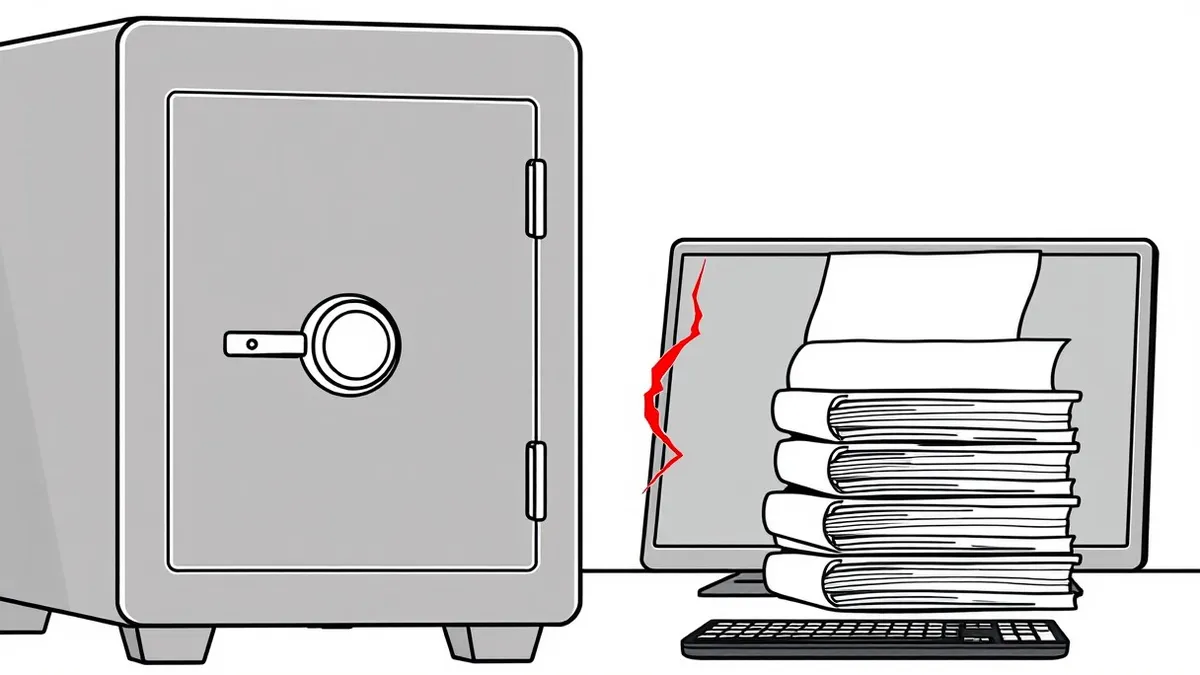
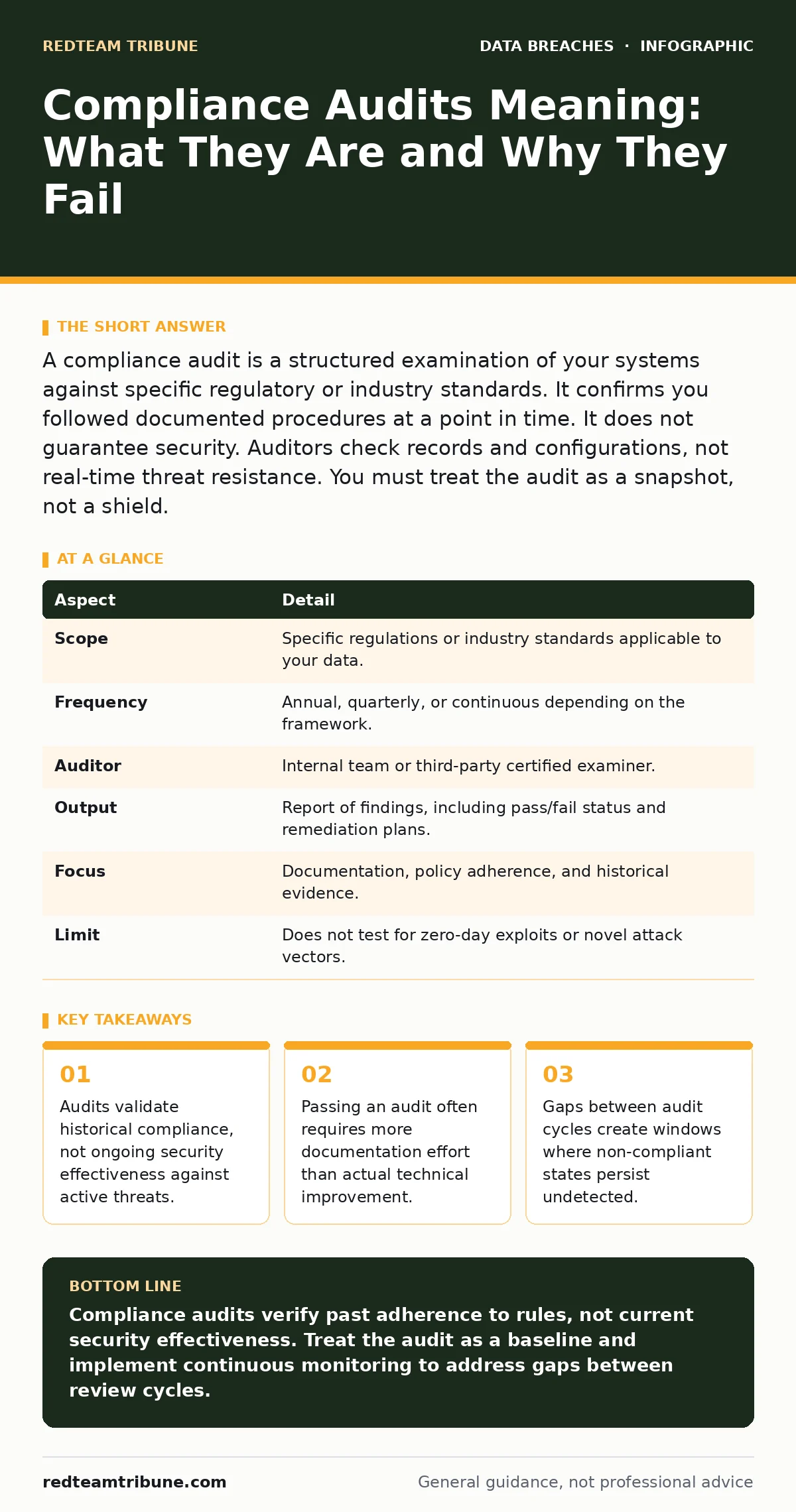
A compliance audit is a structured examination of your systems against specific regulatory or industry standards. It confirms you followed documented procedures at a point in time. It does not guarantee security. Auditors check records and configurations, not real-time threat resistance. You must treat the audit as a snapshot, not a shield.
Everyday Analogy for Compliance Audits
Imagine a restaurant health inspection. The inspector checks if food is stored at the correct temperature and if staff wash their hands. They take photos and sign a report. If the restaurant passes, it means the kitchen was clean at that specific moment. It does not mean the food will be safe tomorrow if the manager stops enforcing hygiene rules. Compliance audits operate similarly. They verify that you followed the rules yesterday. They do not ensure your systems remain secure today.
What Is the Compliance Audits Meaning?
The compliance audits meaning refers to the formal process of verifying that an organization meets specific legal, regulatory, or contractual requirements. These requirements come from frameworks like HIPAA, PCI DSS, or GDPR. An auditor examines your policies, logs, and configurations. They compare your actual practices against the written standards. The goal is to prove accountability, not necessarily technical superiority. You are proving you can follow instructions, not that you are unhackable.
| Aspect | Detail |
|---|---|
| Scope | Specific regulations or industry standards applicable to your data. |
| Frequency | Annual, quarterly, or continuous depending on the framework. |
| Auditor | Internal team or third-party certified examiner. |
| Output | Report of findings, including pass/fail status and remediation plans. |
| Focus | Documentation, policy adherence, and historical evidence. |
| Limit | Does not test for zero-day exploits or novel attack vectors. |
How Compliance Audits Work in Practice
The audit process begins with a scope definition. You identify which systems and data sets fall under the regulation. Next, you gather evidence. This includes policy documents, access logs, and training records. The auditor reviews this evidence. They may interview staff to verify understanding. They check if technical controls match the written policies. For example, if your policy states all data is encrypted, the auditor checks the configuration settings. They do not typically attempt to break the encryption. They verify it is turned on.
This process creates a paper trail. The audit report becomes a legal artifact. It shows you attempted to follow the rules. If a breach occurs later, this report demonstrates due diligence. It reduces liability. It does not prevent the breach. The mechanism relies on periodic verification. Between checks, your security posture can drift. New vulnerabilities emerge. Staff change roles. Policies become outdated. The audit captures a static moment in a dynamic environment.
Who Is Affected by These Reviews?
Every organization handling regulated data faces these reviews. Healthcare providers must meet patient privacy standards. Financial institutions must protect payment card data. Cloud service providers must prove they secure tenant data. Even small businesses face scrutiny if they handle sensitive information. The impact extends beyond the IT department. Legal teams manage the liability. HR teams ensure staff training records are complete. Executives sign off on risk acceptance.
Managed service providers face unique pressure. They must maintain compliance for multiple clients simultaneously. One client’s audit requirements may conflict with another’s. You must segment data and access strictly. Failure to do so risks cross-contamination of compliance failures. You must also provide clear evidence trails for each client. This requires rigorous data inventory and mapping.
What People Usually Get Wrong
Many organizations believe passing an audit means they are secure. This is a dangerous misconception. An audit checks for the presence of controls, not their quality. You can have a firewall configured incorrectly but still pass if the configuration file exists and matches the template. The auditor verifies the document, not the defense. This leads to a false sense of security. Attackers do not care about your audit status. They care about open ports and weak credentials.
Another common error is treating compliance as a one-time project. Security is continuous. Audits are periodic. The gap between reviews is where breaches often happen. Organizations relax controls after the audit concludes. They stop patching promptly. They ignore minor anomalies. This drift accumulates until the next audit. By then, the gap is too large to fix quickly. You must integrate compliance checks into daily operations. Use automated tools to monitor configuration drift. Do not wait for the auditor to find mistakes.
See also: Privacy Impact Assessments: 8 Practices to Prevent Data Breaches · Prevent Cloud Storage Leaks: Configuration Hardening Steps
Actionable Steps for Better Outcomes
Start by aligning your technical controls with audit requirements. Map each requirement to a specific configuration or process. Use automation to enforce these standards. Manual checks are prone to human error. Automate the collection of evidence. This reduces the workload during audit season. It also ensures consistency.
Review your secure file sharing protocols regularly. Auditors often flag unencrypted transfers or weak access controls on shared drives. Ensure that only authorized personnel can access sensitive files. Implement logging for all access events. Retain these logs for the required period. Make sure they are tamper-proof.
Address backup data exposure proactively. Many audits overlook backup systems. Attackers target them because they often lack the same security controls as primary systems. Ensure backups are encrypted and isolated. Test restoration procedures regularly. An audit will ask if you can recover data. You must prove you can.
The Hidden Cost of Compliance
Compliance consumes significant resources. You spend hours documenting procedures and generating reports. This time could be spent on proactive security measures. The hidden cost is opportunity cost. You focus on passing the audit rather than improving security. This leads to a compliance-driven security program. You implement controls because the rulebook says so, not because they mitigate real risks.
This approach fails when attackers use novel techniques. Compliance frameworks are slow to update. They lag behind emerging threats. By the time a new control is mandated, attackers have already found ways around it. You must balance compliance with practical security. Use the audit as a baseline, not a ceiling. Go beyond the minimum requirements. Implement additional controls that address current threat intelligence.
Integrating Related Security Practices
To strengthen your position, integrate breach notification procedures into your audit scope. Auditors will ask how you detect and report incidents. Have a clear plan. Test it regularly. Ensure secure data disposal methods are documented. You must prove that data is destroyed when no longer needed. Shredding hard drives or cryptographically erasing storage is not enough. You need a chain of custody record.
Consider medical identity theft risks if you handle health data. Standard compliance checks may not cover sophisticated identity fraud techniques. Implement additional identity verification steps. Monitor for unusual access patterns. Combine these practices with regular data inventory and mapping exercises. Knowing what you have is the first step to protecting it. Without a complete inventory, you cannot prove compliance for all assets.
Key takeaways
- Audits validate historical compliance, not ongoing security effectiveness against active threats.
- Passing an audit often requires more documentation effort than actual technical improvement.
- Gaps between audit cycles create windows where non-compliant states persist undetected.
Compliance audits verify past adherence to rules, not current security effectiveness. Treat the audit as a baseline and implement continuous monitoring to address gaps between review cycles.
Frequently asked questions
Do compliance audits guarantee security?
No. Audits verify that you followed specific procedures at a point in time. They do not test for real-time threats or novel attack vectors. You can pass an audit and still be vulnerable.
How often should we conduct compliance audits?
Frequency depends on the regulatory framework. Some require annual reviews, while others mandate quarterly or continuous monitoring. Check your specific legal obligations.
What happens if we fail a compliance audit?
You receive a report detailing non-compliant areas. You must create a remediation plan and fix the issues within a specified timeframe. Repeated failures can lead to fines or loss of certification.
Can internal teams perform compliance audits?
Some frameworks allow internal audits for initial assessments. However, final certification usually requires an independent third-party auditor to ensure objectivity and credibility.
How this guide was produced: written by the RedTeam Tribune editorial team with AI assistance, checked against the public references listed below, and reviewed when the facts change. See our editorial policy or report an error.