Why Is Principle of Least Privilege Important for Security
Limiting access rights stops credential theft from becoming a full system compromise by ensuring attackers gain only minimal, useless permissions.
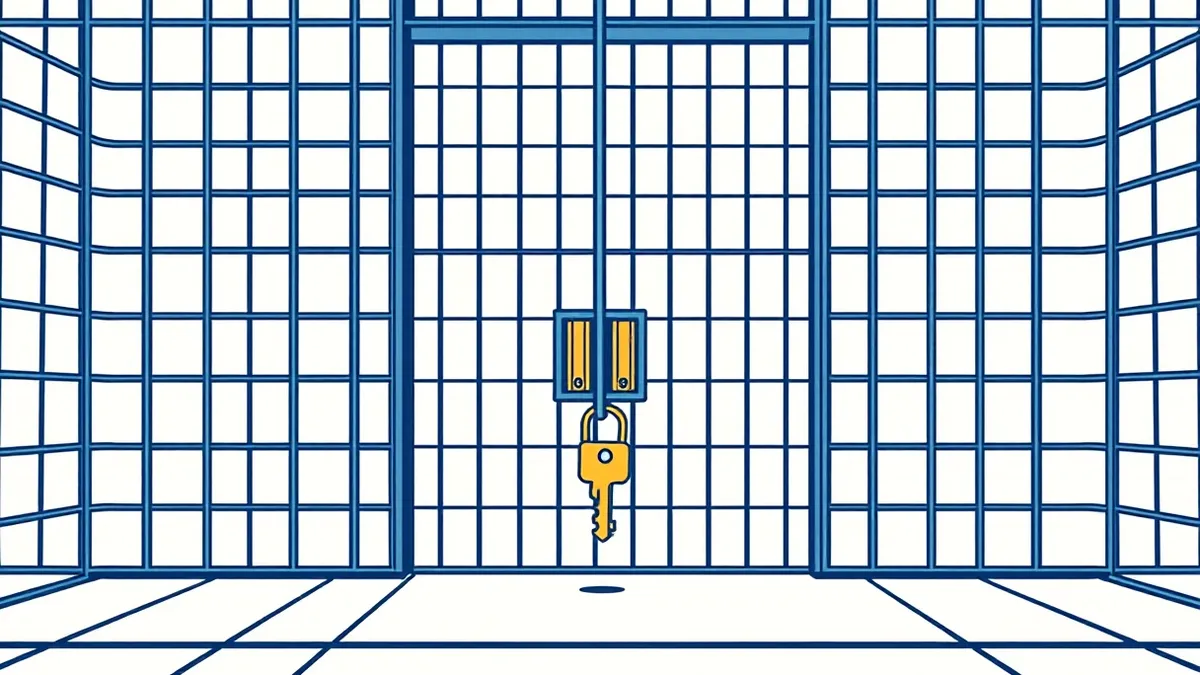
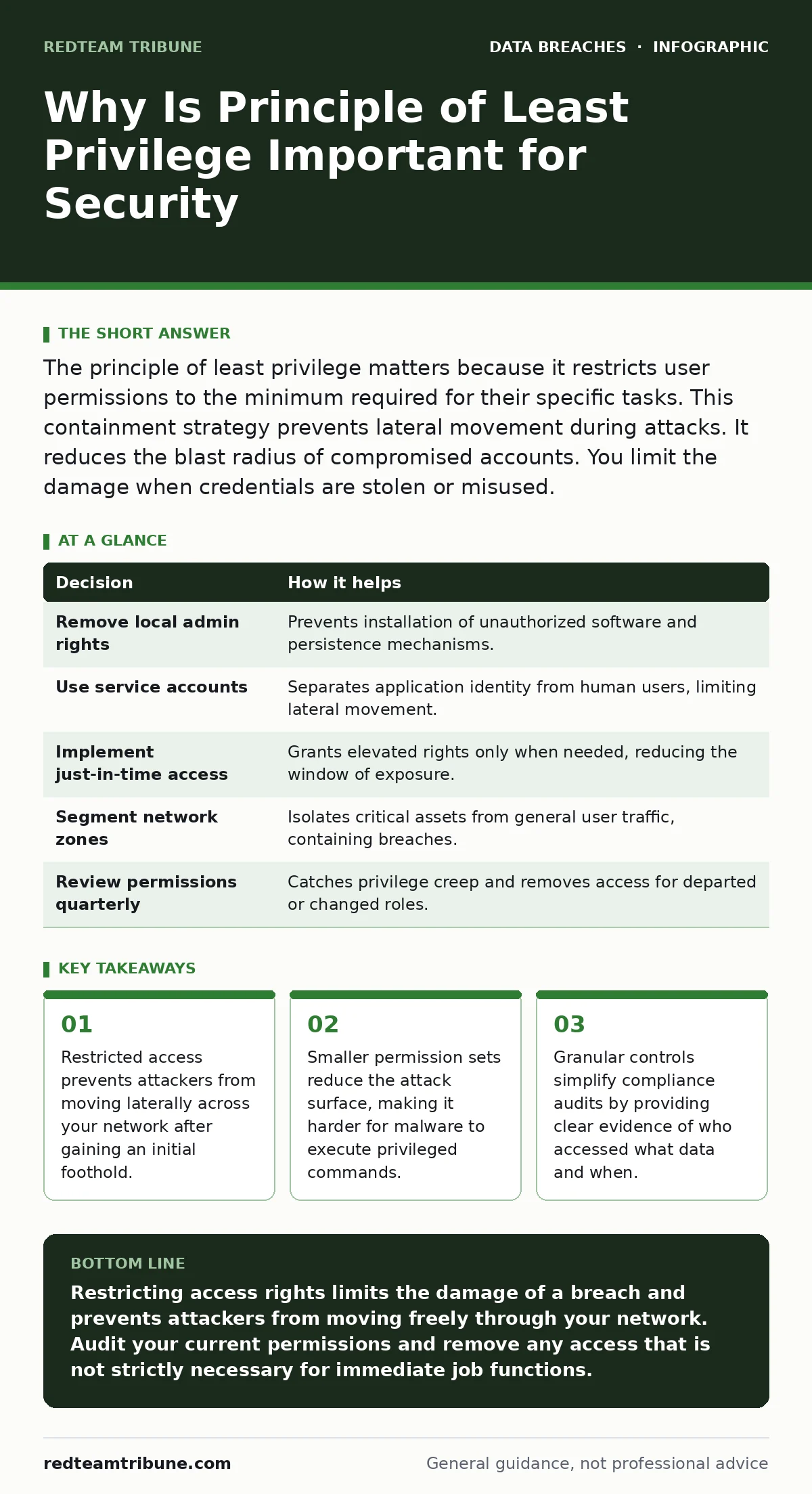
The principle of least privilege matters because it restricts user permissions to the minimum required for their specific tasks. This containment strategy prevents lateral movement during attacks. It reduces the blast radius of compromised accounts. You limit the damage when credentials are stolen or misused.
Why is principle of least privilege important
You grant access based on job function, not potential future needs. This approach limits the damage if an account is compromised. An attacker with limited rights cannot modify system configurations or exfiltrate sensitive databases. The primary benefit is containment. You isolate threats before they spread. This reduces the operational cost of incident response. You spend less time tracing unauthorized changes. The secondary benefit is stability. Users cannot accidentally delete critical files or break production environments. This protects business continuity. You maintain control over your digital assets.
The mechanics of containment
Privilege escalation is the primary threat model. Attackers seek higher permissions to move deeper into your infrastructure. They exploit weak configurations or stolen credentials. When every account has administrative rights, a single breach grants total control. Least privilege breaks this chain. It creates barriers between network segments and data stores. You force attackers to find multiple vulnerabilities to progress. This increases the effort and time required for a successful intrusion. Most attacks fail when the initial gain is insufficient for further movement. You make the target less attractive to automated bots.
What goes wrong without boundaries
Excessive permissions create a flat attack surface. Users retain access to systems they no longer use. Former employees keep active accounts. Service accounts accumulate rights over time. This drift expands the potential entry points for adversaries. Insider threats also increase. Disgruntled employees with broad access can cause significant harm. They can copy intellectual property or disrupt operations. You lack visibility into who can do what. Auditing becomes impossible when everyone has the same keys. You cannot distinguish normal activity from malicious behavior. This blindness delays detection and response.
Decision | How it helps
| Decision | How it helps |
|---|---|
| Remove local admin rights | Prevents installation of unauthorized software and persistence mechanisms. |
| Use service accounts | Separates application identity from human users, limiting lateral movement. |
| Implement just-in-time access | Grants elevated rights only when needed, reducing the window of exposure. |
| Segment network zones | Isolates critical assets from general user traffic, containing breaches. |
| Review permissions quarterly | Catches privilege creep and removes access for departed or changed roles. |
The hidden cost of convenience
Administrators often resist least privilege. They fear it slows down work. They want quick fixes for broken processes. This convenience comes at a high security cost. You trade speed for risk. A single misstep can erase months of progress. The time spent configuring granular policies is an investment. It pays off during an incident. You avoid the chaos of a full-system lockdown. The initial setup requires effort. You must map roles to permissions. You must test access paths. This planning prevents future fires.
See also: Federated Identity vs SSO: The Architectural Difference That Matters · How to Write an Access Control Policy That Stops Broken Access Control
Integrating with other controls
Least privilege works best with other security layers. You cannot rely on it alone. Combine it with strong authentication methods. You should also review your approach to secure file sharing. Unrestricted file access undermines permission controls. Ensure that shared drives follow the same strict rules. Consider how encryption at rest protects data even if access controls fail. It adds a second layer of defense. You should also plan for breach notification requirements. Clear access logs help you report incidents accurately. You need to know exactly what was accessed.
Handling privilege creep
Permissions accumulate over time. Users get new roles but keep old access. This is privilege creep. It creates unnecessary risk. You must have a process to review and remove stale rights. Automate this where possible. Use identity management tools to trigger reviews. You should also look at password rotation policies. Frequent changes do not fix bad permissions. They only add friction. Focus on removing access you do not need. This is more effective than changing credentials. You reduce the number of keys in circulation.
Practical steps for implementation
Start with a baseline. Map current access to job functions. Identify excess permissions. Remove them systematically. Test each change to ensure work continues. Communicate with teams. Explain the security benefits. Address concerns about productivity. Provide a clear path for requesting temporary access. Use approval workflows. This maintains control while allowing flexibility. You should also consider compliance audits. Proper access controls make passing audits easier. You have documented proof of least privilege. This reduces legal and regulatory risk.
Managing external risks
Third-party vendors often need access to your systems. They are a common entry point. You must apply least privilege to them too. Never give them admin rights. Use separate accounts with limited scope. Monitor their activity closely. You should also be aware of misconfigured cloud storage leaks. External access increases the risk of exposure. Ensure cloud buckets are private by default. Review permissions for cloud services regularly. You should also plan for secure data disposal. When vendors leave, revoke all access immediately. Ensure they cannot retrieve deleted data. This final step closes the loop.
Backup and recovery considerations
Backups are critical for recovery. They are also high-value targets. Attackers often encrypt or delete backups to hold organizations hostage. You must protect backup data. Apply least privilege to backup accounts. They should only write to backup storage. They should not read from production. This prevents attackers from using backup credentials to access live systems. You should also review backup data exposure risks. Ensure backups are encrypted and stored securely. Test restoration procedures regularly. You need to know your backups work before an incident. This preparation saves time and money.
Key takeaways
- Restricted access prevents attackers from moving laterally across your network after gaining an initial foothold.
- Smaller permission sets reduce the attack surface, making it harder for malware to execute privileged commands.
- Granular controls simplify compliance audits by providing clear evidence of who accessed what data and when.
Restricting access rights limits the damage of a breach and prevents attackers from moving freely through your network. Audit your current permissions and remove any access that is not strictly necessary for immediate job functions.
Frequently asked questions
How often should I review user permissions?
Review permissions at least quarterly. Trigger additional reviews when employees change roles or leave the organization.
Does least privilege affect productivity?
It may cause minor friction initially. Users must request access for tasks outside their normal scope. This trade-off is worth the security gain.
How do I handle emergency access requests?
Use a just-in-time access model. Grant temporary elevated rights for a specific window. Log the activity and revoke access immediately after.
Is least privilege enough on its own?
No. It must be combined with strong authentication, network segmentation, and regular monitoring. It is one layer of a broader security strategy.
How this guide was produced: written by the RedTeam Tribune editorial team with AI assistance, checked against the public references listed below, and reviewed when the facts change. See our editorial policy or report an error.