Difference Between Cyber Espionage and Cyber Warfare: How to Tell
Espionage steals data quietly while warfare disrupts systems loudly, yet both use identical initial access vectors and require distinct detection strategies.
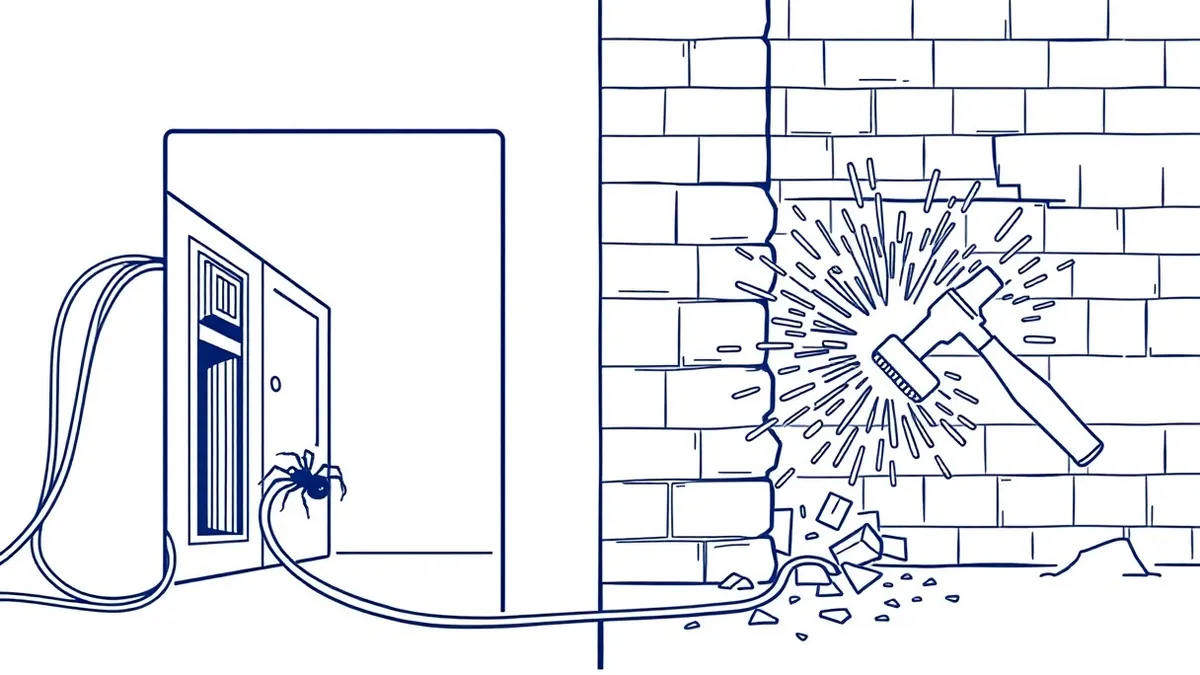
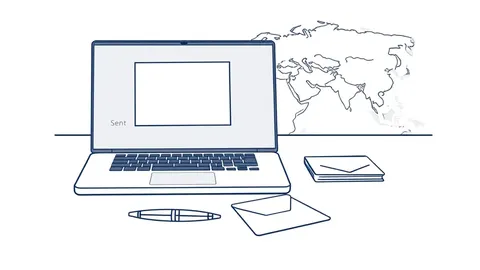
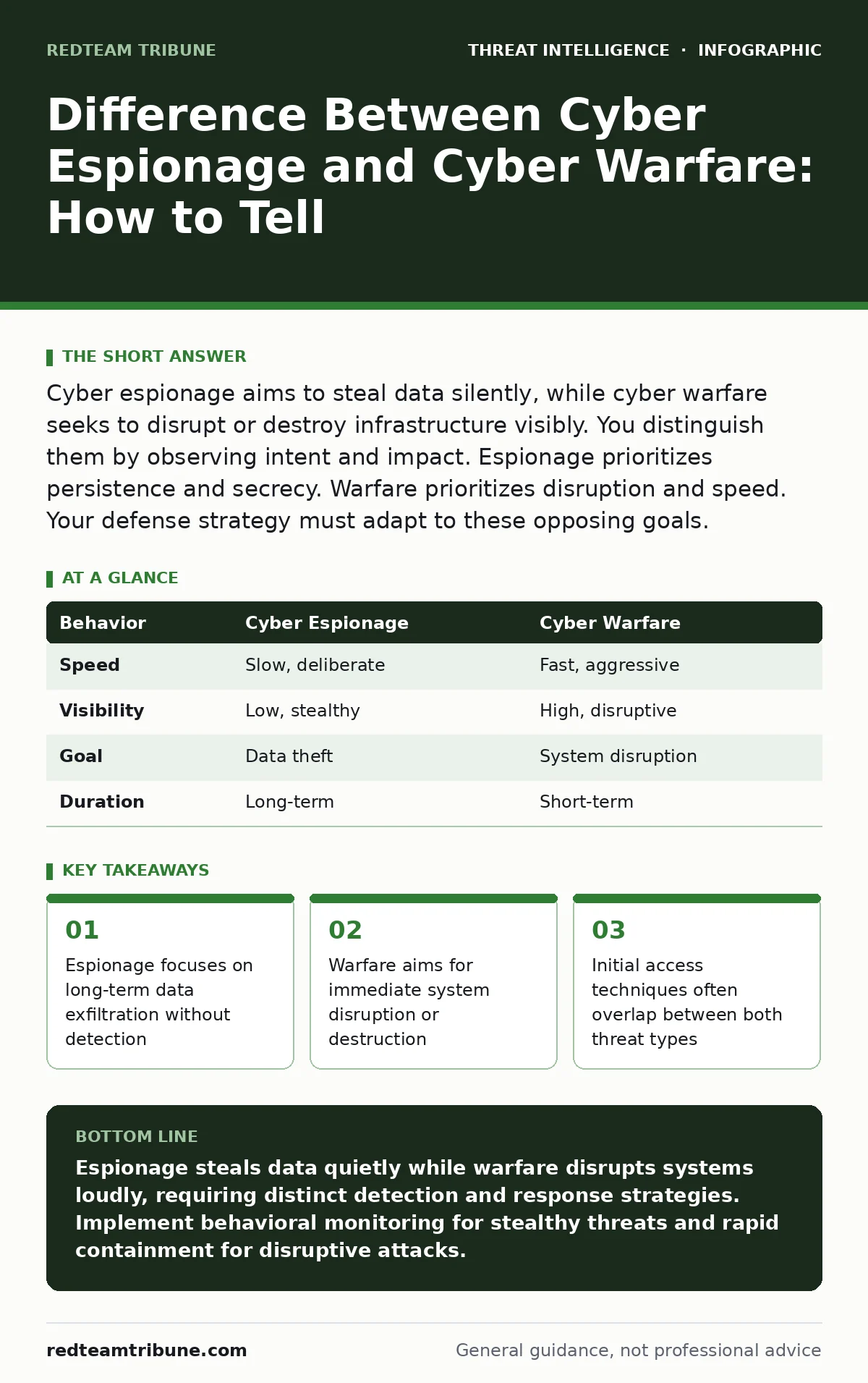
Cyber espionage aims to steal data silently, while cyber warfare seeks to disrupt or destroy infrastructure visibly. You distinguish them by observing intent and impact. Espionage prioritizes persistence and secrecy. Warfare prioritizes disruption and speed. Your defense strategy must adapt to these opposing goals.
What is the difference between cyber espionage and cyber warfare?
Cyber espionage seeks to steal sensitive information silently, whereas cyber warfare aims to disrupt or destroy critical infrastructure. Espionage operators prioritize stealth and long-term access to harvest data over months or years. Warfare actors prioritize impact and speed to cause immediate operational failure. The distinction lies in the end goal rather than the initial entry method. You must identify the objective to choose the right defense.
How do initial access methods compare between the two?
Both threat types use identical initial access techniques, making early detection difficult. Phishing emails, vulnerable remote services, and supply chain compromises serve as entry points for both spies and saboteurs. The malware delivered at this stage often looks similar. You cannot distinguish the threat actor type solely by the entry vector. You must monitor for lateral movement patterns instead. See our guide on network traffic analysis for deeper visibility.
What behavioral patterns distinguish espionage from warfare?
Espionage operators move slowly and quietly to avoid triggering alarms. They establish persistence mechanisms that survive system reboots and patching. They exfiltrate small amounts of data at irregular intervals. Warfare actors move quickly and aggressively to maximize damage. They deploy ransomware or wipers that encrypt or delete files rapidly. They often disable logging and backup systems immediately. These contrasting speeds define your detection window.
| Behavior | Cyber Espionage | Cyber Warfare |
|---|---|---|
| Speed | Slow, deliberate | Fast, aggressive |
| Visibility | Low, stealthy | High, disruptive |
| Goal | Data theft | System disruption |
| Duration | Long-term | Short-term |
Why does intent matter for your defense strategy?
Intent dictates the resources you allocate for incident response. Defending against espionage requires deep forensic analysis and long-term monitoring. You need to identify subtle data leaks and unauthorized access. Defending against warfare requires rapid containment and recovery capabilities. You need to isolate affected systems and restore backups quickly. Mixing these strategies leads to resource waste and security gaps. You must align your tools with the likely objective.
How do you detect stealthy espionage activities?
Detecting espionage requires advanced behavioral analytics and anomaly detection. Standard signature-based tools often miss these slow-moving threats. You should monitor for unusual data access patterns and off-hours activity. Look for accounts accessing files they rarely touch. Check for network connections to unknown external hosts. Implement detection engineering practices to create custom rules. This proactive approach catches subtle deviations before data leaves your network.
See also: 7 Mistakes That Expose You to Dark Web Search Engines
What indicators signal an active cyber warfare attack?
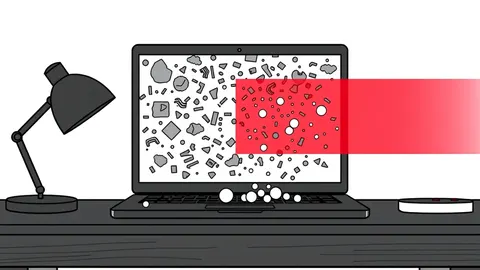
Warfare attacks produce loud, obvious indicators that trigger immediate alerts. You will see spikes in CPU usage and network traffic. System services will crash or fail to start. Files will become encrypted or deleted without user action. Backup systems will show signs of tampering or deletion. These events require immediate isolation of affected systems. Do not attempt to analyze the malware in place. Contain the blast radius first.
How do false positives impact your response time?
False positives delay response during both espionage and warfare incidents. In espionage cases, noise hides the subtle signs of data theft. In warfare cases, noise slows down critical containment actions. You must tune your detection systems to reduce alert fatigue. Prioritize alerts based on severity and impact potential. Validate findings quickly to avoid paralysis. Review our guide on false positives in threat detection for tuning methods.
What role does threat intelligence sharing play?
Sharing threat intelligence helps you identify known espionage and warfare tactics. Communities share indicators of compromise and attack patterns. This collective knowledge improves your detection rules and blocking lists. You gain context about attacker motivations and targets. However, shared data must be verified before implementation. Incorrect data can disrupt your operations. Use established frameworks like MITRE D3FEND to map shared tactics.
How do you prepare for unknown threat objectives?
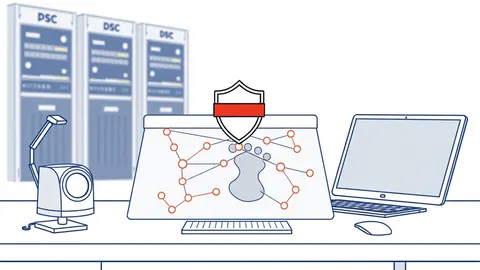
You cannot predict every attack vector or objective. Preparing for unknown threats requires a flexible defense posture. Implement deception technology to detect unauthorized access early. Use adversary emulation to test your detection capabilities regularly. Ensure your incident response plans cover both stealthy theft and loud disruption. Regular testing reveals gaps in your monitoring and recovery processes. Adapt your strategies based on these findings.
What are the long-term implications of each threat?
Cyber espionage compromises trust and intellectual property over time. The damage accumulates as stolen data is used against you. Cyber warfare causes immediate financial and operational losses. Recovery takes significant time and resources. Both threaten your organizational stability. You must maintain a balance between proactive monitoring and rapid response capabilities. Invest in both deep analysis and quick recovery tools.
Key takeaways
- Espionage focuses on long-term data exfiltration without detection
- Warfare aims for immediate system disruption or destruction
- Initial access techniques often overlap between both threat types
- Detection strategies must adapt to differing attacker objectives
Espionage steals data quietly while warfare disrupts systems loudly, requiring distinct detection and response strategies. Implement behavioral monitoring for stealthy threats and rapid containment for disruptive attacks.
Frequently asked questions
Can cyber espionage turn into cyber warfare?
Yes, espionage actors may escalate to warfare tactics if they need to cover their tracks or cause additional disruption. Monitor for sudden changes in attacker behavior and increased system impact.
How do I prioritize defenses for limited resources?
Focus on strong identity management and network segmentation. These controls limit both data theft and system disruption regardless of the attacker's specific objective.
What is the best way to detect initial access?
Monitor for unusual login patterns and unauthorized software installations. Early detection of compromised accounts prevents both espionage and warfare activities from progressing.
Should I use the same tools for both threats?
No, espionage requires deep forensic tools for long-term monitoring, while warfare needs rapid containment and recovery tools. Ensure your toolkit supports both use cases effectively.
How this guide was produced: written by the RedTeam Tribune editorial team with AI assistance, checked against the public references listed below, and reviewed when the facts change. See our editorial policy or report an error.