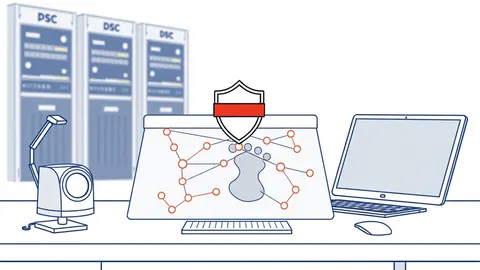
Dark web threat intelligence implementation steps for early warnings
Monitoring hidden forums yields more noise than signal unless you filter automated chatter before ingestion.

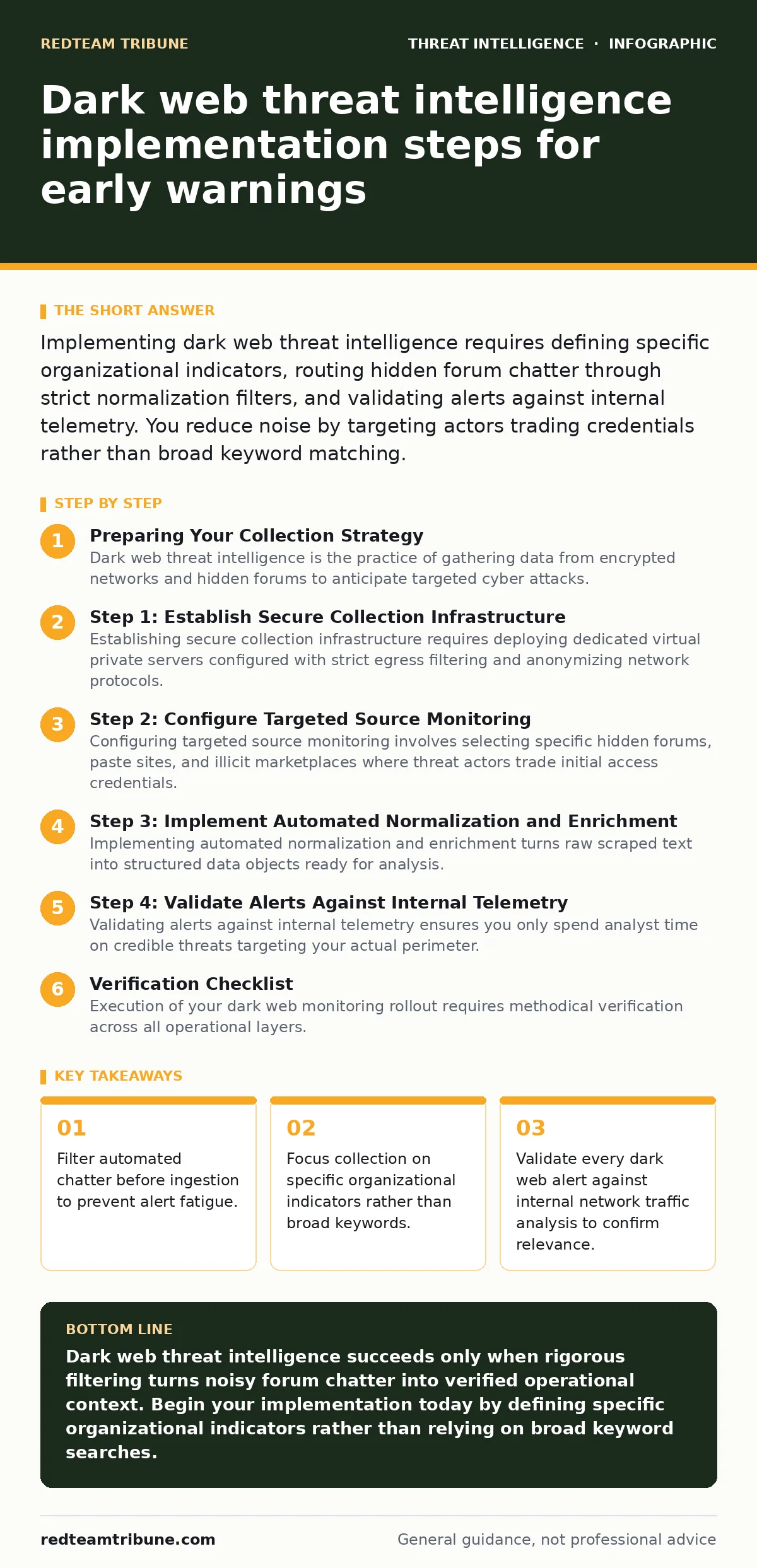
Implementing dark web threat intelligence requires defining specific organizational indicators, routing hidden forum chatter through strict normalization filters, and validating alerts against internal telemetry. You reduce noise by targeting actors trading credentials rather than broad keyword matching.
Preparing Your Collection Strategy
Dark web threat intelligence is the practice of gathering data from encrypted networks and hidden forums to anticipate targeted cyber attacks. You must define precise collection parameters before writing a single query or deploying a scraper. Broad keyword searches for your organization name generate thousands of false alarms caused by automated scrapers and unrelated public discussions.
Focus your collection scope on specific assets like internal domain structures, unique server naming conventions, and specific employee credential formats. Target actor personas rather than generic keywords to find meaningful chatter. This preparation phase dictates whether your monitoring program surfaces actionable early warnings or buries your team in useless data.
Step 1: Establish Secure Collection Infrastructure
Step 1: Provision Isolated Scrapers
Establishing secure collection infrastructure requires deploying dedicated virtual private servers configured with strict egress filtering and anonymizing network protocols. You must isolate this collection environment completely from your corporate network to prevent malicious payloads from jumping back into your systems.
Step 1: Verify Egress Anonymity
Verify that your collection infrastructure routes traffic correctly through onion routing networks without leaking internal DNS requests or real IP addresses. You know this step worked when test queries originating from your scrapers show zero telemetry linking back to your organization's real physical infrastructure or autonomous system numbers.
Step 2: Configure Targeted Source Monitoring
Configuring targeted source monitoring involves selecting specific hidden forums, paste sites, and illicit marketplaces where threat actors trade initial access credentials. You should avoid indexing every available hidden site and instead focus on markets and communication channels frequented by actors targeting your specific industry vertical.
Tune your ingestion filters to discard automated spam listings and duplicate posts syndicated across multiple underground forums. You can confirm this configuration works when your ingestion pipeline successfully flags a newly created post advertising stolen credentials while ignoring automated forum banner advertisements and unrelated chatter.
Step 3: Implement Automated Normalization and Enrichment
Implementing automated normalization and enrichment turns raw scraped text into structured data objects ready for analysis. You need parsing scripts that extract usernames, Internet Protocol addresses, and domain hashes from unstructured forum posts before they reach your analyst queues.
Enrich these extracted artifacts by cross-referencing them against public threat intelligence sharing platforms to see if the indicators appear elsewhere. You can verify the success of this step by inspecting your database to ensure raw HTML strings convert cleanly into standardized JSON records containing populated indicator fields.
Step 4: Validate Alerts Against Internal Telemetry
Validating alerts against internal telemetry ensures you only spend analyst time on credible threats targeting your actual perimeter. You must correlate harvested credentials and server access offers with active directory logs and network scanning outputs to determine if the exposed asset actually exists on your network.
Test this validation loop by injecting a synthetic credential record into your ingestion pipeline and confirming that your correlation engine automatically cross-checks it against active directory. You can verify this integration works when a high-fidelity alert triggers only if the compromised username matches an active user account in your directory.
See also: Network Scanning Myths: Why Common Beliefs Fail in Detection · Difference Between Cyber Espionage and Cyber Warfare: How to Tell
Verification Checklist
Execution of your dark web monitoring rollout requires methodical verification across all operational layers. Use this checklist to confirm your infrastructure operates securely and effectively.
- Collection servers route all traffic exclusively through anonymizing networks.
- Ingestion pipelines discard duplicate posts and automated marketing spam.
- Parsers successfully convert unstructured forum text into structured indicators.
- Alert filters correlate scraped credentials against internal directory logs.
- Analysts review flagged items within defined service level agreements.
Maintaining Long-Term Intelligence Operations
Maintaining long-term intelligence operations requires continuous adjustment of your search queries as threat actors migrate to new communication channels and encryption protocols. You must routinely audit your collection sources to replace dead forums with active marketplaces and update your asset lists to reflect corporate acquisitions or infrastructure changes.
Integrate insights from your intelligence feeds into broader detection engineering efforts to build custom monitoring rules for emerging attack techniques. You ensure ongoing operational relevance by periodically testing your scrapers against known static test pages to verify that network routing and parsing scripts remain functional over time.
Key takeaways
- Filter automated chatter before ingestion to prevent alert fatigue.
- Focus collection on specific organizational indicators rather than broad keywords.
- Validate every dark web alert against internal network traffic analysis to confirm relevance.
Dark web threat intelligence succeeds only when rigorous filtering turns noisy forum chatter into verified operational context. Begin your implementation today by defining specific organizational indicators rather than relying on broad keyword searches.
Frequently asked questions
How do you prevent your scrapers from getting blocked by hidden forum administrators?
You prevent scraper blocks by randomizing request intervals, rotating exit nodes, and avoiding aggressive automated traversal patterns that trigger anti-bot defenses.
What distinguishes useful dark web intelligence from public breach data dumps?
Useful dark web intelligence captures pre-attack planning, targeted credential sales, and bespoke access negotiations before public compilation sites index the same material.
How often should collection queries and target lists be updated?
Collection queries and target lists require review on a monthly basis to account for forum domain migrations, shifting threat actor personas, and changes in organizational infrastructure.
What role does attribution play in dark web threat intelligence operations?
Attribution remains secondary to asset protection because confirming the true identity of a forum poster is difficult and often irrelevant to stopping an active credential compromise.
How this guide was produced: written by the RedTeam Tribune editorial team with AI assistance, checked against the public references listed below, and reviewed when the facts change. See our editorial policy or report an error.