Security Operations Centers: Definition, Purpose, and Core Functions
Security operations centers transform raw data into actionable intelligence, turning noise into signal to detect threats before they cause damage.
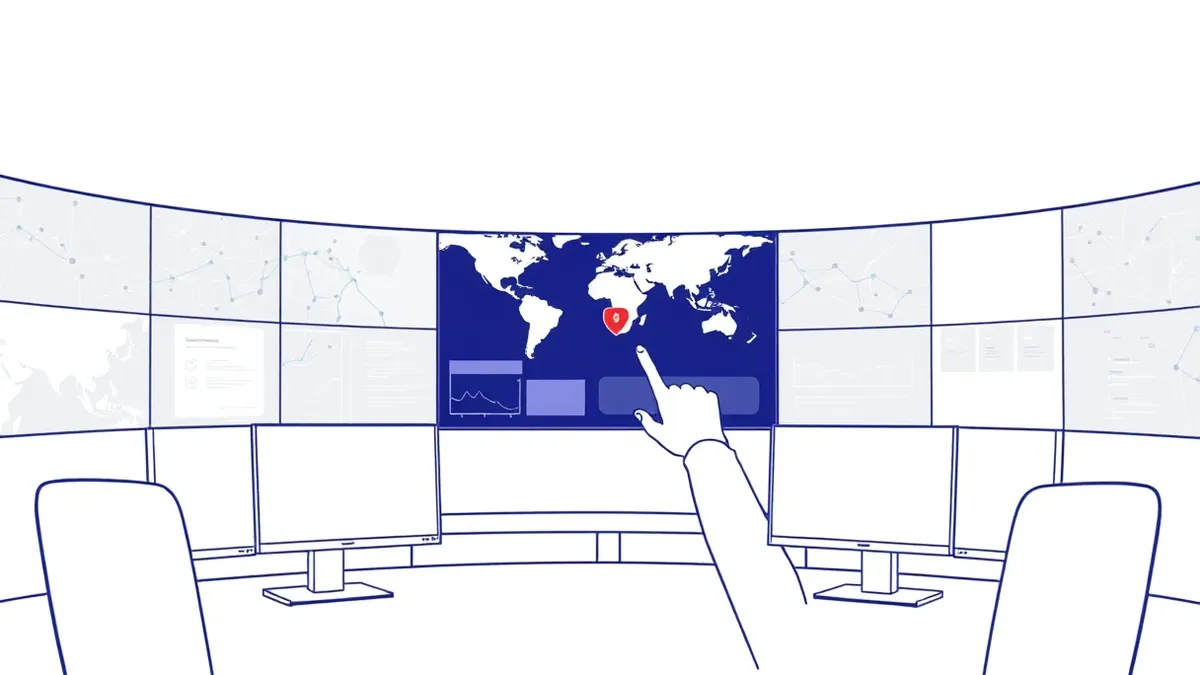
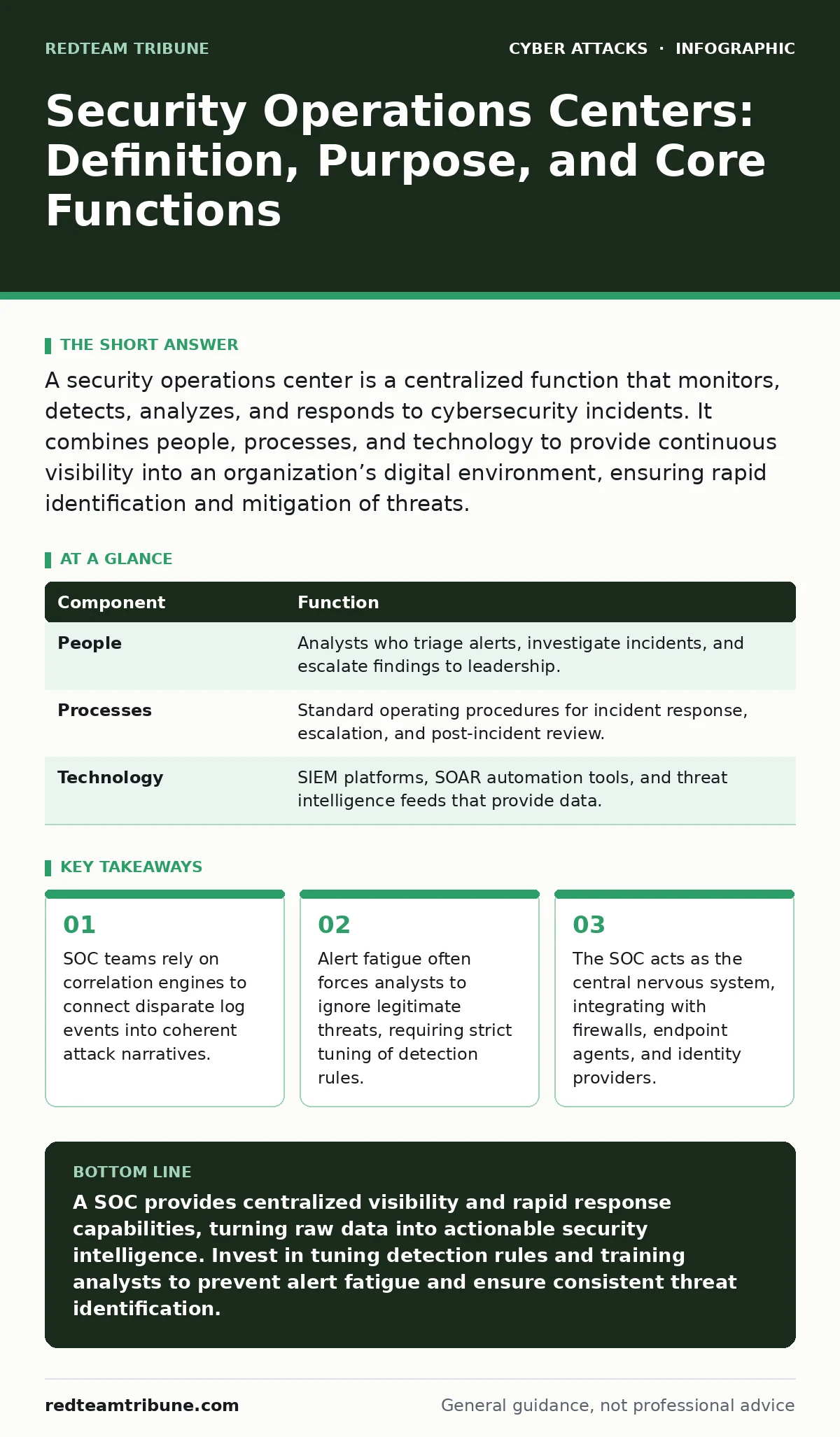
A security operations center is a centralized function that monitors, detects, analyzes, and responds to cybersecurity incidents. It combines people, processes, and technology to provide continuous visibility into an organization’s digital environment, ensuring rapid identification and mitigation of threats.
The Control Tower Analogy
Imagine an air traffic control tower. Controllers do not fly the planes, but they see every aircraft on the radar screen. They coordinate takeoffs, landings, and emergency diversions. They maintain order in a chaotic, high-speed environment.
A security operations center functions similarly for digital infrastructure. It does not block traffic directly, but it observes all network activity. It correlates data from multiple sources to identify patterns that indicate malicious behavior. Just as air traffic controllers prevent mid-air collisions, SOC analysts prevent data breaches and system compromises.
The primary goal is visibility. Without this centralized view, security tools operate in isolation. A firewall logs a block, an endpoint detects malware, and an email gateway quarantines a message. None of these events tell the full story on their own. The SOC connects these dots.
The Problem of Noise
The core problem a SOC solves is information overload. Modern organizations generate terabytes of log data daily. Servers, applications, network devices, and user endpoints all produce events. Most of these events are benign routine activity.
If you try to monitor every log entry manually, you will miss the threat hidden among millions of normal events. This is known as signal-to-noise ratio failure. The SOC applies filters and correlation rules to reduce this noise. It elevates only the events that match known attack patterns or anomalous behavior.
This reduction allows analysts to focus on high-fidelity alerts. Instead of reviewing thousands of login attempts, they review the specific sequence that indicates credential stuffing. This distinction saves time and reduces operational stress.
Core Components of the SOC
A SOC is not just software. It is a triad of people, processes, and technology. Each component must align for the center to function effectively.
| Component | Function |
|---|---|
| People | Analysts who triage alerts, investigate incidents, and escalate findings to leadership. |
| Processes | Standard operating procedures for incident response, escalation, and post-incident review. |
| Technology | SIEM platforms, SOAR automation tools, and threat intelligence feeds that provide data. |
People provide the judgment that automation lacks. They understand context, such as why a server rebooted at 3 AM. Processes ensure consistency. They define who does what when an alert triggers. Technology provides the scale. It ingests logs from thousands of devices simultaneously.
Where the SOC Fits
The SOC sits at the intersection of defensive layers. It does not replace other security controls. Instead, it relies on them for data.
For example, firewalls generate logs about blocked traffic. The SOC analyzes these logs to see if the blocking was part of a larger scanning campaign. Network segmentation limits lateral movement. The SOC monitors for attempts to cross segment boundaries, which often indicates an intruder trying to expand their access.
Identity management systems also feed into the SOC. When a user logs in from an unusual location, the SOC investigates. This integration allows the SOC to detect sophisticated attacks that bypass single-layer defenses. It provides a holistic view of security posture.
The Reality of Alert Fatigue
One unexpected challenge is alert fatigue. Even with tuning, analysts receive hundreds of alerts daily. Many are false positives. Over time, the brain begins to ignore warnings. This desensitization is dangerous. It can cause analysts to miss a genuine breach because it looks like another noisy alert.
To combat this, SOCs must continuously refine their detection rules. They must suppress known benign events. They must prioritize alerts based on severity and context. Automation helps by handling low-risk tasks. This allows human analysts to focus on complex investigations.
See also: What Is Virtual Patching: How It Works Without Code Changes · Stop Log Tampering: A Defensive Checklist for Integrity
What People Usually Get Wrong
Many organizations believe that buying a Security Information and Event Management (SIEM) platform creates a SOC. This is a common misconception. Software alone cannot analyze intent or context. Without skilled analysts and defined processes, the tool is just a data warehouse.
Another mistake is assuming the SOC handles everything. It does not fix vulnerabilities. It does not patch systems. It identifies issues and notifies the teams responsible for remediation. The SOC is a detection and response function, not a maintenance crew.
Integration with Other Defenses
The SOC works closely with other security disciplines. For instance, when investigating potential adversary-in-the-middle phishing attempts, the SOC looks for anomalies in certificate usage or DNS queries. It correlates these signals with email gateway logs.
Similarly, when monitoring for insider threats, the SOC analyzes user behavior analytics. It flags deviations from normal baselines, such as accessing sensitive files at odd hours. This behavioral analysis complements traditional access controls.
The SOC also plays a role in mitigating MFA fatigue attacks. By detecting rapid, repeated MFA prompts to a single user, the SOC can trigger an account lockout or require step-up authentication. This rapid response prevents attackers from overwhelming users into approval.
Continuous Improvement
A SOC is never finished. Threats evolve, and so must defenses. Regular tabletop exercises test the team’s response capabilities. These simulations reveal gaps in processes and technology.
Post-incident reviews are equally important. After every significant event, the team analyzes what worked and what failed. They update detection rules and refine playbooks. This cycle of feedback ensures the SOC adapts to new tactics.
Key takeaways
- SOC teams rely on correlation engines to connect disparate log events into coherent attack narratives.
- Alert fatigue often forces analysts to ignore legitimate threats, requiring strict tuning of detection rules.
- The SOC acts as the central nervous system, integrating with firewalls, endpoint agents, and identity providers.
A SOC provides centralized visibility and rapid response capabilities, turning raw data into actionable security intelligence. Invest in tuning detection rules and training analysts to prevent alert fatigue and ensure consistent threat identification.
Frequently asked questions
What is the difference between a SOC and a NOC?
A Network Operations Center focuses on infrastructure health and uptime, while a Security Operations Center focuses on threat detection and incident response.
Do I need a physical SOC location?
No. Modern SOCs are often virtual or cloud-based, allowing analysts to work from anywhere while accessing centralized security tools.
How many analysts does a SOC need?
The number depends on the volume of data and the complexity of the environment. Smaller organizations may start with one or two analysts, while larger ones require shift coverage.
Can a SOC prevent all breaches?
No security measure can guarantee complete protection. A SOC improves detection speed and response effectiveness, reducing the impact and duration of breaches.
How this guide was produced: written by the RedTeam Tribune editorial team with AI assistance, checked against the public references listed below, and reviewed when the facts change. See our editorial policy or report an error.