What Is Virtual Patching: How It Works Without Code Changes
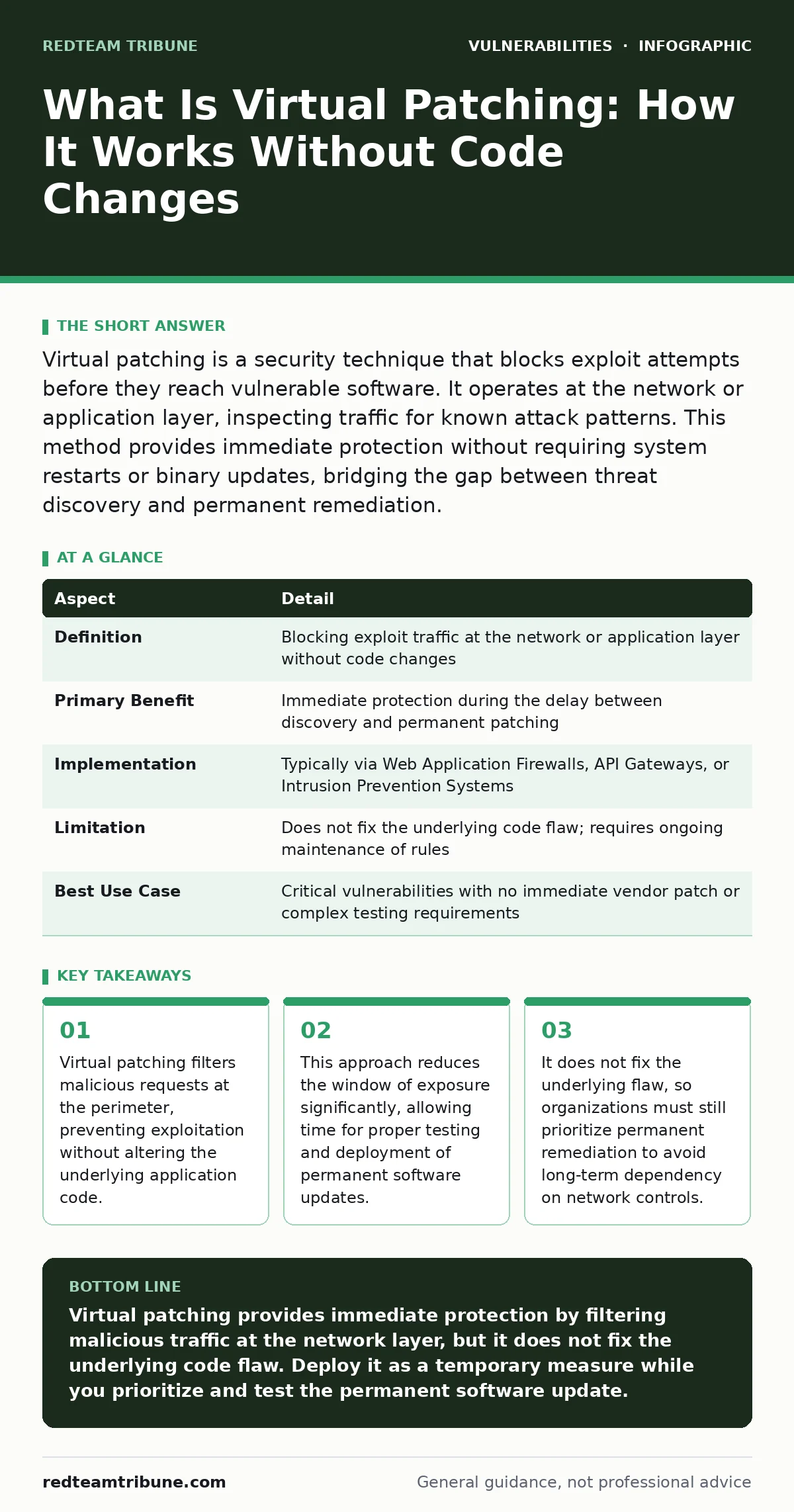
Virtual patching stops attacks at the network edge by filtering malicious traffic, allowing you to protect systems immediately while developers prepare permanent code fixes.
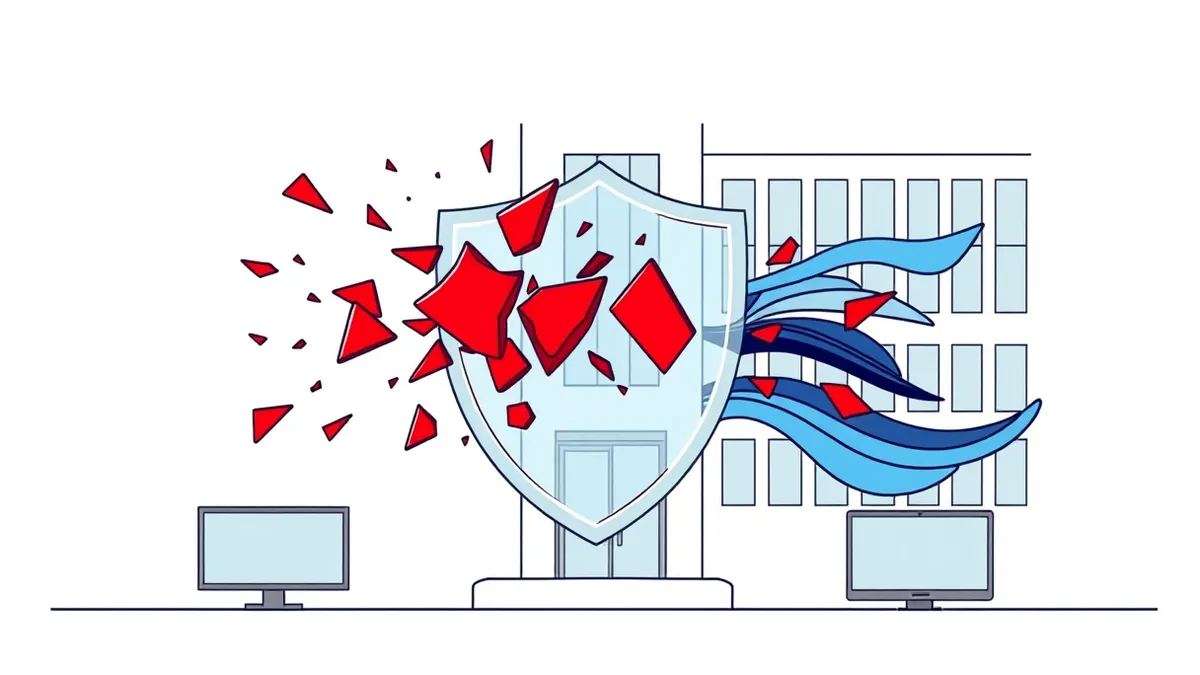
Virtual patching is a security technique that blocks exploit attempts before they reach vulnerable software. It operates at the network or application layer, inspecting traffic for known attack patterns. This method provides immediate protection without requiring system restarts or binary updates, bridging the gap between threat discovery and permanent remediation.
What is virtual patching?
Virtual patching refers to the practice of blocking malicious traffic targeting a known vulnerability without modifying the vulnerable software itself. You place a protective layer, such as a web application firewall or intrusion prevention system, between the attacker and the application. This layer inspects incoming requests and drops those that match the signature of the exploit. The application remains unchanged, but the attack never reaches it. This concept addresses the urgent need to protect assets when immediate code updates are impossible or risky.
Imagine a building with a broken lock. Instead of replacing the lock immediately, you install a security guard at the door who stops anyone trying to pick it. The lock is still broken, but the thief cannot enter. Virtual patching acts as that security guard for digital systems. It provides immediate risk reduction while you prepare a permanent fix. This distinction matters because many organizations confuse temporary network controls with actual software remediation. Understanding this difference helps you plan your response strategy more effectively.
| Aspect | Detail |
|---|---|
| Definition | Blocking exploit traffic at the network or application layer without code changes |
| Primary Benefit | Immediate protection during the delay between discovery and permanent patching |
| Implementation | Typically via Web Application Firewalls, API Gateways, or Intrusion Prevention Systems |
| Limitation | Does not fix the underlying code flaw; requires ongoing maintenance of rules |
| Best Use Case | Critical vulnerabilities with no immediate vendor patch or complex testing requirements |
How virtual patching works in practice
The mechanism relies on deep packet inspection and pattern matching. When a request arrives, the security device compares it against a database of known attack signatures. If the request contains specific strings, sequences, or behaviors associated with a vulnerability, the device blocks it. This happens in milliseconds, often before the web server even processes the connection. The technology looks for anomalies in HTTP headers, body content, or parameter structures.
For example, if a vulnerability allows an attacker to inject malicious code into a search field, the virtual patch identifies the injection pattern. It drops the request and returns an error to the client. The application logs show no evidence of the attack because the traffic never reached the application logic. This separation of concerns allows network security teams to act independently from development teams. You gain time to test the real patch in a staging environment without exposing users to risk.
Who is affected by this approach
This technique impacts several roles within an organization. Security operations teams gain a tool to reduce alert noise and prevent successful intrusions. They can focus on genuine threats rather than reacting to every scan. Development teams benefit from the breathing room to test patches thoroughly. Rushed updates often introduce new bugs or break existing functionality. Virtual patching removes the pressure to deploy untested code.
Management and risk officers see a reduction in liability. By demonstrating immediate action, you show due diligence in protecting customer data. However, the approach also creates a dependency on the security device. If the device fails or the rules are misconfigured, the vulnerability remains exposed. You must monitor the effectiveness of the virtual patch continuously. It is not a set-and-forget solution. The responsibility shifts from fixing code to maintaining accurate filtering rules.
What to do about virtual patching
Start by identifying critical assets that cannot be patched immediately. These are often legacy systems, third-party applications, or components with complex dependencies. For these assets, create specific filtering rules based on the exploit technique. Do not rely on generic signatures, as they may block legitimate traffic. You need precision to avoid disrupting business operations.
Test the virtual patch in a non-production environment first. Verify that it blocks the attack without affecting normal users. Monitor logs for false positives, where legitimate requests are incorrectly blocked. Adjust the rules until the balance is right. Once deployed, set a clear deadline for removing the virtual patch. It should only exist until the permanent fix is verified and applied. Keep the rule in place only as long as necessary to minimize maintenance overhead.
Common mistakes in implementation
Many teams treat virtual patching as a permanent solution. This is a critical error. The underlying code flaw remains, and attackers may find new ways to bypass the network filter. Over time, the rule set becomes bloated and harder to manage. You must prioritize permanent remediation. Use virtual patching only as a bridge, not a destination.
Another mistake is applying broad rules that block too much traffic. If you block an entire IP range or a common user-agent string, you risk denying service to legitimate customers. This leads to business disruption and user frustration. You need to target the specific exploit vector. Precision is more valuable than volume. Regularly review and prune old rules that are no longer relevant. This keeps your security infrastructure lean and effective.
See also: Stop Log Tampering: A Defensive Checklist for Integrity · Adversary Emulation Best Practices: Realistic Threat Simulation
Why virtual patching is not a fix
Virtual patching does not alter the binary or source code of the application. The vulnerability still exists in the software. If an attacker finds a way to bypass the network filter, they can exploit the flaw directly. This might happen through a different protocol or an internal network path that bypasses the firewall. You cannot trust the perimeter to protect every attack vector.
Permanent patching removes the root cause. It changes the code so the attack is no longer possible. Virtual patching only hides the symptom. Think of it as putting a bandage on a wound. It stops the bleeding, but it does not heal the tissue. You must still clean and stitch the wound properly. This distinction is vital for long-term security hygiene. Do not let the convenience of virtual patching delay necessary code changes.
Integrating with other security measures
Virtual patching works best when combined with other defense layers. It complements practices like output encoding and broken access control mitigation. By filtering traffic at the edge, you reduce the load on application-level defenses. This allows your developers to focus on secure coding practices rather than emergency response.
You should also consider how virtual patching interacts with API vulnerabilities. Many modern attacks target APIs, and virtual patching can inspect API requests for malicious payloads. This adds a layer of protection without changing the API code. However, you must ensure that the virtual patch rules keep pace with API changes. Outdated rules can break API functionality. Regular testing and coordination between security and development teams are necessary.
The role of threat intelligence
Effective virtual patching depends on accurate threat intelligence. You need to know what the attack looks like to block it. This requires staying updated on new vulnerabilities and exploit techniques. Security vendors and open-source communities often share indicators of compromise. You can use these to create precise filtering rules.
However, not all intelligence is reliable. Some sources may provide false positives or outdated information. You must verify the accuracy of the rules before deployment. Test them in a controlled environment. This prevents unnecessary blocking of legitimate traffic. By combining threat intelligence with careful testing, you maximize the effectiveness of virtual patching. This approach ensures that you are blocking real threats, not just noise.
Key takeaways
- Virtual patching filters malicious requests at the perimeter, preventing exploitation without altering the underlying application code.
- This approach reduces the window of exposure significantly, allowing time for proper testing and deployment of permanent software updates.
- It does not fix the underlying flaw, so organizations must still prioritize permanent remediation to avoid long-term dependency on network controls.
Virtual patching provides immediate protection by filtering malicious traffic at the network layer, but it does not fix the underlying code flaw. Deploy it as a temporary measure while you prioritize and test the permanent software update.
Frequently asked questions
Does virtual patching protect against zero-day vulnerabilities?
Virtual patching can protect against zero-day vulnerabilities if you can identify the attack pattern. However, without a known signature, creating an effective rule is difficult. It works best when you have some insight into the exploit method.
Can virtual patching replace regular software updates?
No, virtual patching cannot replace regular software updates. It only blocks specific attack traffic. The underlying vulnerability remains, and attackers may find new ways to bypass the filter. Permanent patching is always required.
How do I know if my virtual patch is working?
Monitor logs for blocked requests matching the exploit signature. Verify that legitimate traffic is not being blocked. Regular testing with proof-of-concept exploits helps confirm the rule's effectiveness.
Is virtual patching suitable for internal networks?
Virtual patching can be used on internal networks, but it is less common. Internal threats may bypass perimeter filters. You should focus on network segmentation and host-based protections for internal assets.
How this guide was produced: written by the RedTeam Tribune editorial team with AI assistance, checked against the public references listed below, and reviewed when the facts change. See our editorial policy or report an error.