Network Segmentation Mistakes That Leave Your Data Exposed
Most segmentation fails because administrators treat it as a static map rather than a dynamic enforcement of least privilege across changing trust boundaries.
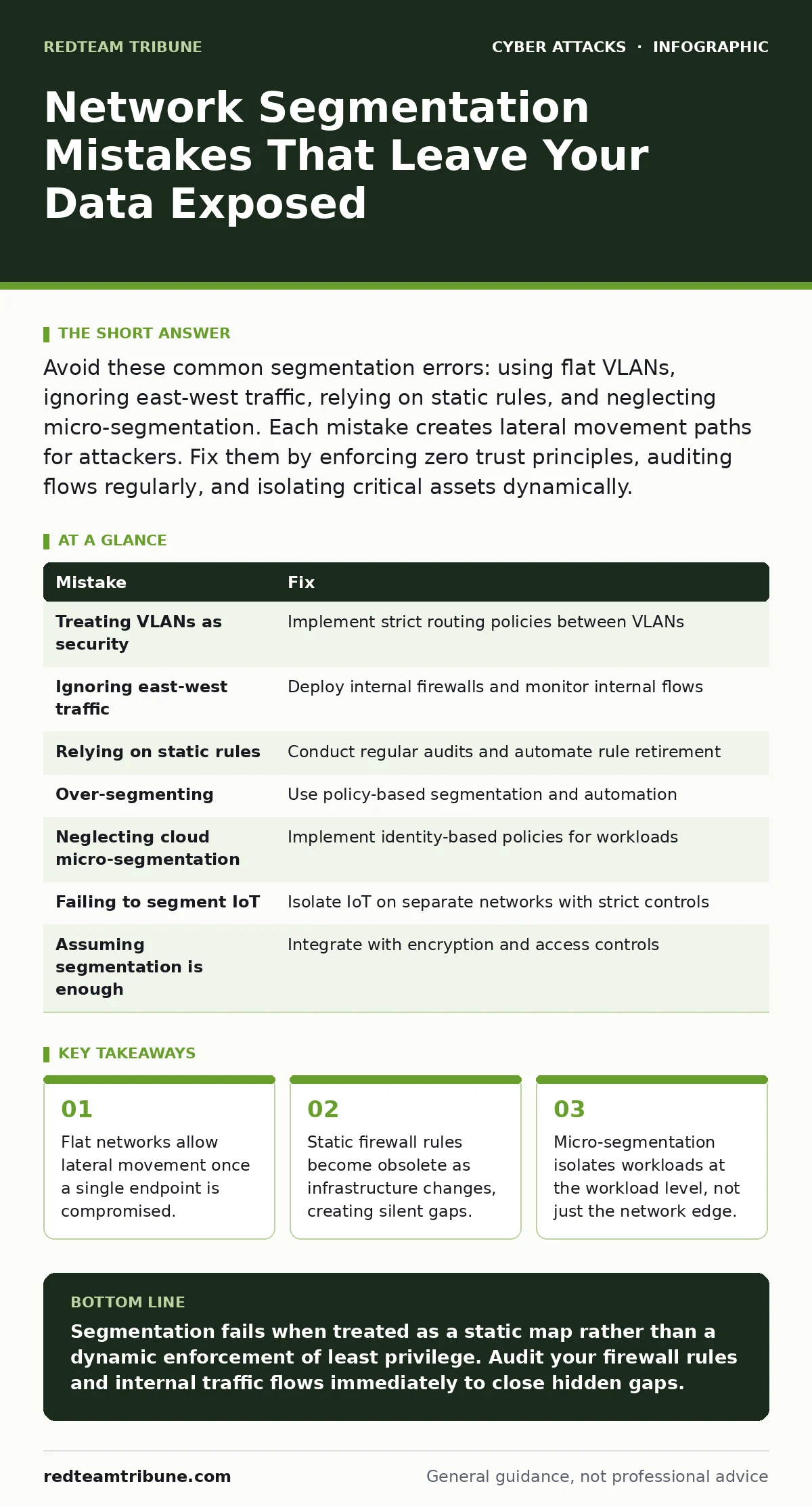
Avoid these common segmentation errors: using flat VLANs, ignoring east-west traffic, relying on static rules, and neglecting micro-segmentation. Each mistake creates lateral movement paths for attackers. Fix them by enforcing zero trust principles, auditing flows regularly, and isolating critical assets dynamically.
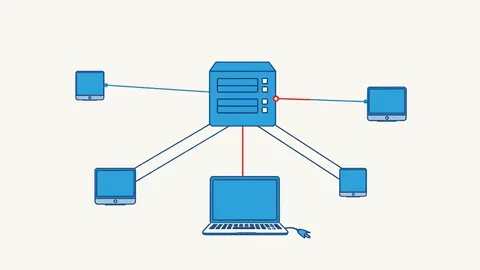
Network segmentation divides a network into smaller, isolated sections to limit the spread of threats. When done correctly, it contains breaches. When done poorly, it gives you the illusion of security while leaving wide-open doors for attackers. You must understand the mechanics of failure to build defenses that hold.
Mistake 1: Treating VLANs as Security Boundaries
Many administrators assume that placing devices in different Virtual Local Area Networks (VLANs) stops traffic between them. A VLAN is a logical grouping of devices that behave as if they are on the same physical network, regardless of their physical location. This assumption is dangerous. VLANs are primarily for broadcast domain management, not access control. Without explicit firewall rules or access control lists between VLANs, traffic can flow freely if the switch configuration allows it.
Why it hurts: An attacker who compromises a device in the guest VLAN can scan and pivot into the corporate VLAN if inter-VLAN routing is open. The segmentation fails because the barrier is administrative, not technical. You create a false sense of isolation. The attacker moves laterally with ease, treating the VLAN boundary as a suggestion rather than a wall.
The fix: Implement strict routing policies between every VLAN pair. Deny all traffic by default and permit only specific ports and protocols required for business function. Treat every VLAN interface as a firewall zone. This ensures that even if the switch misconfigures, the router or firewall blocks unauthorized flow.
Mistake 2: Ignoring East-West Traffic
Traditional security focuses on north-south traffic, which moves between the internet and your internal network. East-west traffic moves between servers, databases, and applications within your data center. Many teams secure the perimeter but leave the internal server farm wide open. They assume that if the firewall stops the external attacker, the internal assets are safe. This is a critical blind spot.
Why it hurts: Once an attacker bypasses the perimeter, often through techniques like QR code phishing or domain spoofing, they enter the internal network. If east-west traffic is unmonitored, they can move from a web server to a database server without triggering alerts. The lack of internal visibility allows them to map your infrastructure and exfiltrate data quietly.
The fix: Deploy internal firewalls or next-generation firewalls between server zones. Monitor all internal traffic for anomalies. Use network detection and response tools that inspect payloads, not just headers. This forces attackers to reveal themselves when they attempt to move between internal assets. Refer to our guide on security operations centers for details on monitoring internal flows.
Mistake 3: Relying on Static Firewall Rules
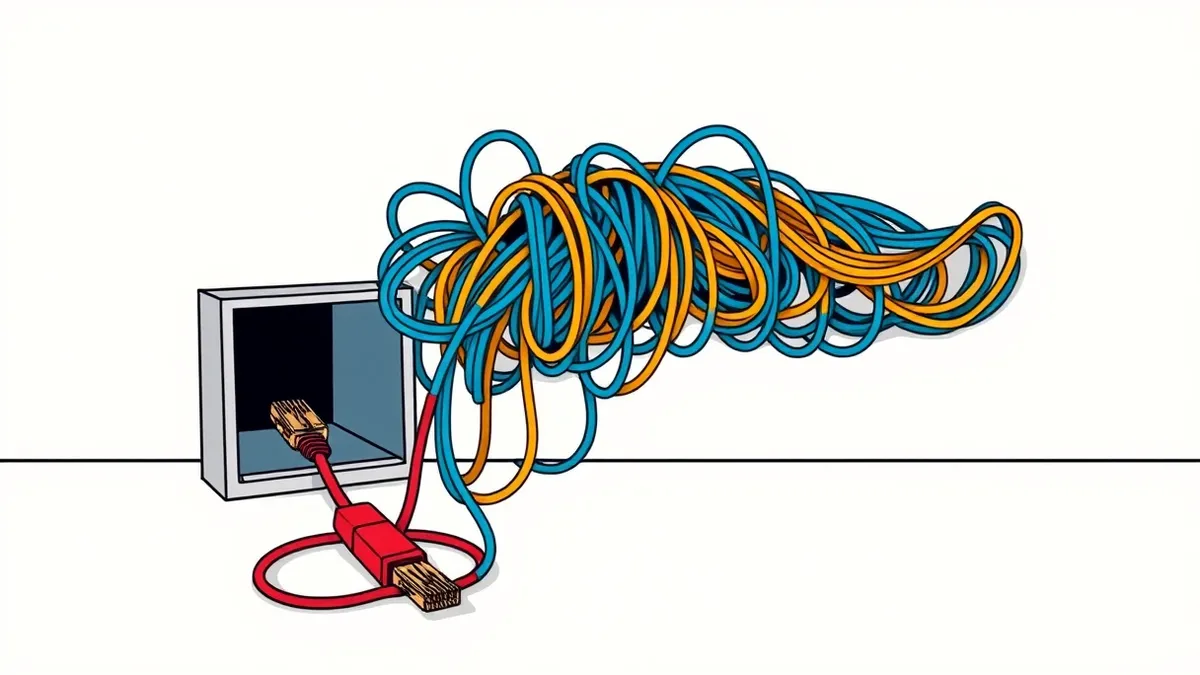
Firewall rules are often written once and never reviewed. As applications change, new ports open, and servers move, these static rules become outdated. Administrators add permissive rules to fix connectivity issues quickly, creating a "rule sprawl." Over time, the firewall configuration becomes a tangled web of exceptions. You lose track of what traffic is actually allowed versus what is merely possible.
Why it hurts: Stale rules allow traffic that is no longer needed. An old rule might permit a legacy application to talk to a production database. If that legacy app is compromised, the attacker has a direct path to critical data. The rule exists because it was needed five years ago, not because it is needed today. This creates hidden backdoors that are difficult to audit.
The fix: Conduct regular firewall rule audits. Remove rules that have no traffic flow in the last six months. Implement a change management process that requires justification for every new rule. Automate rule retirement where possible. This keeps the security posture tight and reduces the attack surface.
Mistake 4: Over-Segmenting Without Management
Some teams segment every device into its own zone to maximize isolation. While this limits lateral movement, it creates massive management overhead. Administrators struggle to keep track of thousands of micro-zones. Connectivity issues arise when a legitimate service needs to talk to a newly isolated segment. The complexity leads to errors and bypasses.
Why it hurts: The administrative burden causes fatigue. Administrators may open wide rules to fix connectivity issues quickly, defeating the purpose of segmentation. The system becomes brittle, breaking under minor changes. You spend more time managing the segmentation than securing the network. This is a hidden cost that erodes security over time.
The fix: Use policy-based segmentation. Define policies based on roles and functions rather than individual devices. Group similar assets together. Use automation to enforce these policies. This balances security with manageability. It allows you to scale segmentation without drowning in complexity.
Mistake 5: Neglecting Micro-Segmentation for Cloud Workloads
Traditional segmentation relies on network boundaries like subnets. In cloud environments, workloads are dynamic and ephemeral. Containers spin up and down, changing IP addresses constantly. Static network boundaries cannot keep up with this fluidity. Treating cloud instances like on-premise servers leads to gaps in protection.
Why it hurts: An attacker who compromises a container can move to other containers in the same subnet if micro-segmentation is not in place. The dynamic nature of the cloud means that traditional perimeter defenses are insufficient. You expose sensitive data to lateral movement within the cloud platform. This is especially risky if insider threats exploit these gaps.
The fix: Implement micro-segmentation at the workload level. Use identity-based policies that follow the workload regardless of its location or IP address. This ensures that only authorized services can communicate. It provides consistent security across hybrid environments. Check our guide on firewalls for insights on integrating traditional and cloud security.
See also: Network Scanning Myths: Why Common Beliefs Fail in Detection · DDoS Attack Mechanics: Answers to 10 Critical Questions
Mistake 6: Failing to Segment IoT and OT Devices
Internet of Things (IoT) and Operational Technology (OT) devices often have weak security. They may run outdated software, lack patching mechanisms, or use hardcoded credentials. Placing these devices on the same network as corporate systems is a major risk. They are frequent targets for initial compromise due to their vulnerabilities.
Why it hurts: An attacker can use a compromised IoT device as a foothold to attack the corporate network. These devices are often less monitored, making detection difficult. The attacker can pivot from the IoT network to the critical infrastructure network. This can lead to significant operational disruption and data loss.
The fix: Isolate IoT and OT devices on separate networks with strict access controls. Limit their communication to only necessary services. Use network access control to ensure only authorized devices connect. Regularly scan for vulnerabilities in these devices. This limits the impact of a compromise to the IoT segment.
Mistake 7: Assuming Segmentation Replaces Other Controls
Some teams believe that segmentation alone is enough to secure the network. They neglect other security controls like encryption, access management, and endpoint protection. Segmentation is a layer of defense, not a silver bullet. It limits movement but does not prevent initial compromise.
Why it hurts: If an attacker gains access to a segmented zone, they can still steal data or disrupt services within that zone. Segmentation does not protect against data exfiltration from within the segment. It does not prevent insider threats who have legitimate access. Relying solely on segmentation leaves you vulnerable to targeted attacks within segments.
The fix: Integrate segmentation with a broader security strategy. Use encryption for data at rest and in transit. Implement strong access controls and MFA fatigue attacks prevention. Monitor for suspicious activity within segments. This creates a defense-in-depth approach that protects against various threats.
| Mistake | Fix |
|---|---|
| Treating VLANs as security | Implement strict routing policies between VLANs |
| Ignoring east-west traffic | Deploy internal firewalls and monitor internal flows |
| Relying on static rules | Conduct regular audits and automate rule retirement |
| Over-segmenting | Use policy-based segmentation and automation |
| Neglecting cloud micro-segmentation | Implement identity-based policies for workloads |
| Failing to segment IoT | Isolate IoT on separate networks with strict controls |
| Assuming segmentation is enough | Integrate with encryption and access controls |
Key takeaways
- Flat networks allow lateral movement once a single endpoint is compromised.
- Static firewall rules become obsolete as infrastructure changes, creating silent gaps.
- Micro-segmentation isolates workloads at the workload level, not just the network edge.
Segmentation fails when treated as a static map rather than a dynamic enforcement of least privilege. Audit your firewall rules and internal traffic flows immediately to close hidden gaps.
Frequently asked questions
Does network segmentation stop ransomware?
It limits the spread of ransomware by containing it within a segment. It does not prevent the initial infection, so endpoint protection is still required.
How do I handle legacy systems that cannot be segmented?
Isolate legacy systems on a separate network with strict access controls. Use jump hosts for administrative access and monitor traffic closely.
Is micro-segmentation expensive?
It requires initial investment in tools and policies. However, it reduces long-term management costs and risk by automating enforcement and reducing rule sprawl.
Can segmentation impact performance?
Properly designed segmentation has minimal impact on performance. Poorly designed segmentation with excessive inspection can cause latency. Optimize rules and hardware accordingly.
How this guide was produced: written by the RedTeam Tribune editorial team with AI assistance, checked against the public references listed below, and reviewed when the facts change. See our editorial policy or report an error.