Data Residency vs Sovereignty: The Legal Distinction That Matters
Physical location does not guarantee legal protection when foreign courts can compel data disclosure regardless of server geography.
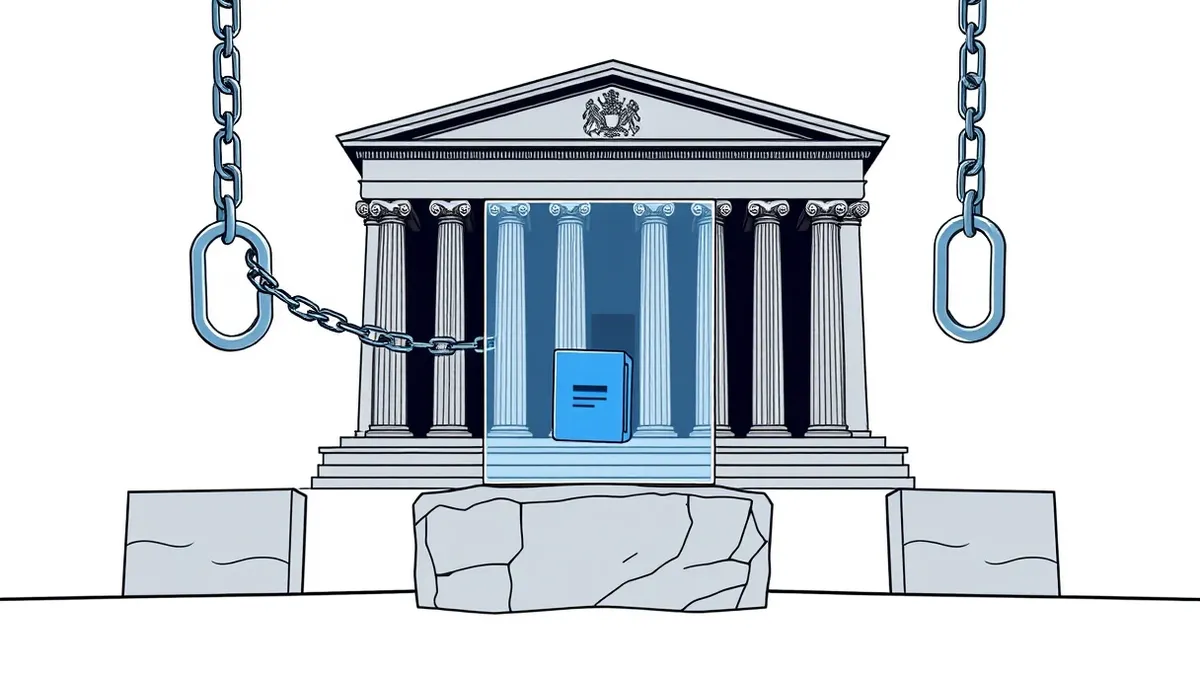
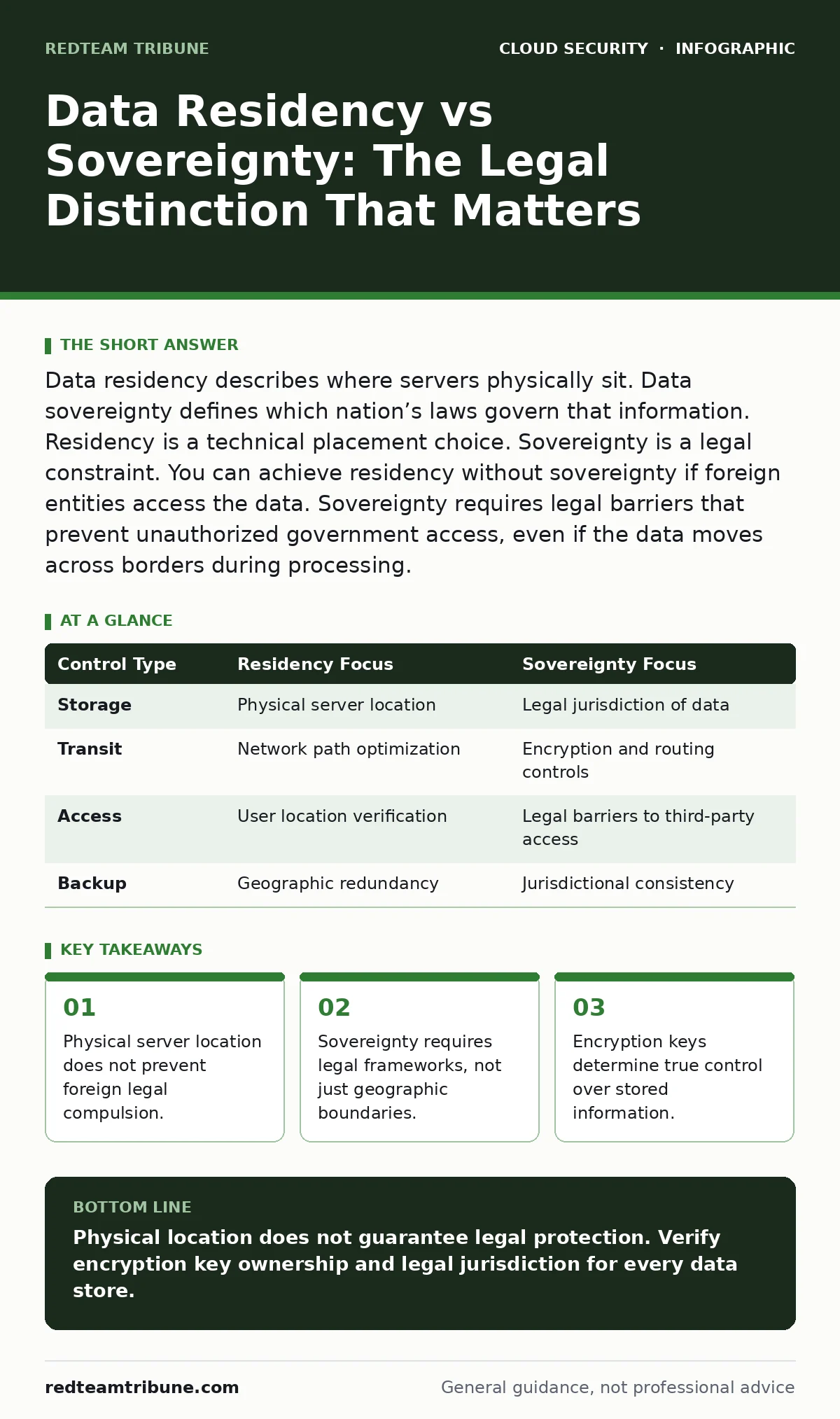
Data residency describes where servers physically sit. Data sovereignty defines which nation’s laws govern that information. Residency is a technical placement choice. Sovereignty is a legal constraint. You can achieve residency without sovereignty if foreign entities access the data. Sovereignty requires legal barriers that prevent unauthorized government access, even if the data moves across borders during processing.
What is the difference between data residency and sovereignty?
Data residency is the physical location of your storage infrastructure. Data sovereignty is the legal jurisdiction that applies to that information. These concepts are often confused but operate on different planes. Residency is a technical configuration. Sovereignty is a legal status. You can store data in a specific country to satisfy residency requirements. That same data may remain subject to the laws of another nation if the provider is headquartered elsewhere. Understanding this distinction prevents compliance failures.
Does storing data locally ensure legal protection?
No, physical placement alone does not create legal immunity. A server rack in a specific region does not block foreign subpoenas. If the cloud provider is incorporated in a different country, that nation’s laws may override local restrictions. This creates a compliance gap for regulated industries. You must verify the provider’s corporate structure. You must also review their data access policies. Physical proximity offers operational benefits like latency reduction. It does not automatically shield your records from external legal demands.
How do encryption keys affect data sovereignty?
Encryption keys determine who can actually read your information. If you hold the keys, you maintain sovereignty even if the provider holds the ciphertext. If the provider manages the keys, they can decrypt and expose data to law enforcement. This technical reality overrides geographic boundaries. Key management systems allow you to retain control. You must define clear policies for key rotation and access. This approach aligns with best practices for access key rotation. It ensures that compromised credentials do not lead to long-term data exposure.
What happens when data moves across borders?
Data in transit often crosses multiple jurisdictions. Routing decisions are made by network operators, not by you. A packet may pass through a country with weak privacy laws. This temporary exposure can violate sovereignty requirements. You must use end-to-end encryption for all transfers. You must also audit your network paths. Some organizations implement multi-region failover strategies that accidentally route data through non-compliant zones. Verify that your disaster recovery plans respect legal boundaries. Ensure that backup locations meet the same sovereignty standards as primary sites.
Which frameworks help enforce these controls?
Public standards provide a baseline for verification. The NIST framework offers guidance on risk management. ISO 27001 provides requirements for information security management. These frameworks do not replace legal advice. They help you document your controls. You should conduct regular cloud security assessments to validate compliance. These reviews identify gaps in your configuration. They also verify that your technical controls match your legal obligations. Documentation is critical for audits. Keep records of all data flows and access events.
| Control Type | Residency Focus | Sovereignty Focus |
|---|---|---|
| Storage | Physical server location | Legal jurisdiction of data |
| Transit | Network path optimization | Encryption and routing controls |
| Access | User location verification | Legal barriers to third-party access |
| Backup | Geographic redundancy | Jurisdictional consistency |
See also: Overprivileged Cloud Identities: How to Find and Fix Excess Access · 7 Common CASB Mistakes That Create Blind Spots
How do third-party vendors complicate sovereignty?
Sub-processors often handle data without your direct knowledge. A primary provider may use a backup service in a different country. This creates hidden exposure points. You must map your entire supply chain. Review contracts for data processing addendums. Ensure that sub-processors adhere to the same legal standards. This complexity often requires cloud landing zones to enforce consistent policies. These architectural patterns help you manage permissions and configurations. They reduce the risk of accidental non-compliance.
What technical controls support legal requirements?
Technical measures must align with legal goals. Identity management systems prevent unauthorized access. Implement federated identity to centralize authentication. This reduces the attack surface. Use cloud access security brokers (CASB) to monitor data movement. These tools detect anomalies and enforce policies. They provide visibility into shadow IT. Regular audits ensure that configurations remain compliant. You must also consider Pod Security Standards if using containerized workloads. These standards restrict risky behaviors that could expose data.
What are the common pitfalls to avoid?
Assuming residency equals sovereignty is the most common error. This mistake leads to false confidence. Another pitfall is ignoring data in transit. Static data may be secure, but moving data is vulnerable. You must also watch for vendor lock-in. Changing providers can be difficult if data is scattered. Plan for exit strategies early. Document all data flows. Test your recovery procedures. Ensure that your team understands the legal implications of technical choices.
How do you maintain compliance over time?
Compliance is not a one-time task. Laws change, and providers update their services. You must monitor regulatory updates. Adjust your controls accordingly. Regular reviews prevent drift. Automate where possible. Use policy-as-code to enforce standards. This reduces human error. Train your staff on the differences between residency and sovereignty. Clear communication prevents mistakes. Keep your documentation current. This ensures that you can demonstrate compliance during audits.
Key takeaways
- Physical server location does not prevent foreign legal compulsion.
- Sovereignty requires legal frameworks, not just geographic boundaries.
- Encryption keys determine true control over stored information.
Physical location does not guarantee legal protection. Verify encryption key ownership and legal jurisdiction for every data store.
Frequently asked questions
Can I use cloud services if I need strict sovereignty?
Yes, but you must use customer-managed encryption keys and verify the provider’s legal structure. Ensure that no foreign laws can compel data disclosure.
Does data residency affect performance?
Yes, storing data closer to users reduces latency. However, performance gains should not override legal requirements for sovereignty.
What if my provider moves data without notice?
Review your contract for data movement clauses. Implement technical controls that prevent unauthorized transfers. Monitor your environment for anomalies.
How do I handle cross-border backups?
Ensure that backup locations meet the same legal standards as primary sites. Use encryption to protect data in all jurisdictions.
How this guide was produced: written by the RedTeam Tribune editorial team with AI assistance, checked against the public references listed below, and reviewed when the facts change. See our editorial policy or report an error.