Cloud Landing Zones for Small Teams: Secure Foundations Without the Enterprise Price
Small teams can enforce strict security boundaries and automated compliance by defining immutable infrastructure templates rather than relying on manual configuration checks.
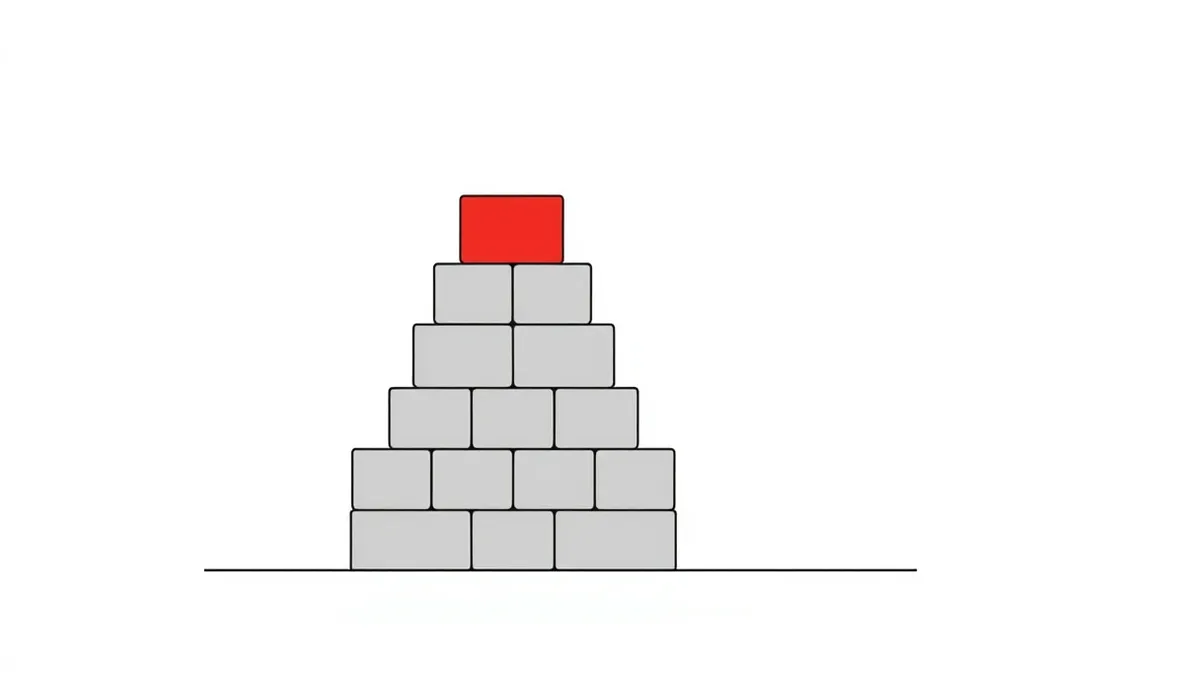
A cloud landing zone is a foundational account structure that enforces security and governance before workloads deploy. For smaller organizations, it prevents configuration drift and limits blast radius through automated identity and network boundaries, ensuring consistent protection without heavy overhead.
The Blast Radius Problem
Small teams often treat their cloud environment as a single shared space. This approach creates a single point of failure. If one application is compromised, an attacker moves laterally to every other resource. A landing zone breaks this connectivity. It establishes separate accounts or projects for different functions, such as development, testing, and production.
This separation limits the blast radius. An attacker who gains control of a development server cannot reach production data. The boundary is enforced by infrastructure code, not by human memory. This structural defense works even when staff turnover is high or when contractors have temporary access.
Identity as the Perimeter
Traditional security focuses on firewalls. Cloud security focuses on identity. Your landing zone must enforce strict identity and access management from day one. This means no human user should have long-term credentials. Instead, users assume roles with limited permissions.
Multi-factor authentication is mandatory for all administrative access. The landing zone configuration should block login attempts that do not include a second factor. This prevents password theft from leading to full account compromise. You should also enable just-in-time access, where elevated privileges expire automatically after a short period.
Network Segmentation Strategies
A flat network allows any device to talk to any other device. This is convenient for debugging but dangerous for security. Your landing zone should define virtual private clouds or virtual networks with strict segmentation. Place public-facing resources in a distinct zone from sensitive data stores.
Use network access control lists to deny all traffic by default. Then, allow only the specific traffic required for your applications to function. This reduces the attack surface significantly. If an attacker compromises a web server, they cannot directly query your internal databases because the network path does not exist.
Centralized Logging and Monitoring
You cannot protect what you cannot see. Small teams often skip logging because it seems expensive or complex. However, centralized logging is the only way to detect subtle anomalies. Your landing zone must aggregate logs from all accounts into a single, secure storage location.
This storage location must be write-once-read-many to prevent attackers from deleting evidence. You should set up alerts for high-severity events, such as changes to security groups or new administrative users. These alerts allow you to react before a small breach becomes a major incident.
Cost Control and Budget Alerts
Security and cost often overlap in cloud environments. Misconfigured resources can lead to unexpected charges. Your landing zone should include budget alerts that notify you when spending exceeds expected thresholds. This is a defense against cloud cryptojacking, where attackers use your resources to mine cryptocurrency.
If costs spike unexpectedly, it may indicate a security breach rather than a billing error. By monitoring spend alongside security logs, you gain an additional layer of detection. This approach requires no additional software, only proper configuration of native cloud tools.
See also: 7 Common CASB Mistakes That Create Blind Spots · Stop Cloud Data Exfiltration: Small Business Risks and Low-Cost Fixes
Automation and Infrastructure as Code
Manual configuration is prone to error. Humans forget to enable encryption or misconfigure access rules. A landing zone uses infrastructure as code to define the desired state of your environment. When you deploy new resources, the code ensures they comply with your security policies.
This automation ensures consistency. Every environment looks the same, reducing the chance of configuration drift. It also allows you to audit your security posture easily by reviewing the code. You can integrate this with cloud security posture management (CSPM) tools to continuously scan for misconfigurations.
Delegating to IT Providers
You do not need to build this alone. Many managed service providers specialize in cloud security. However, you must understand what they are doing. Do not hand over full administrative access without oversight. Require that they work within the constraints of your landing zone.
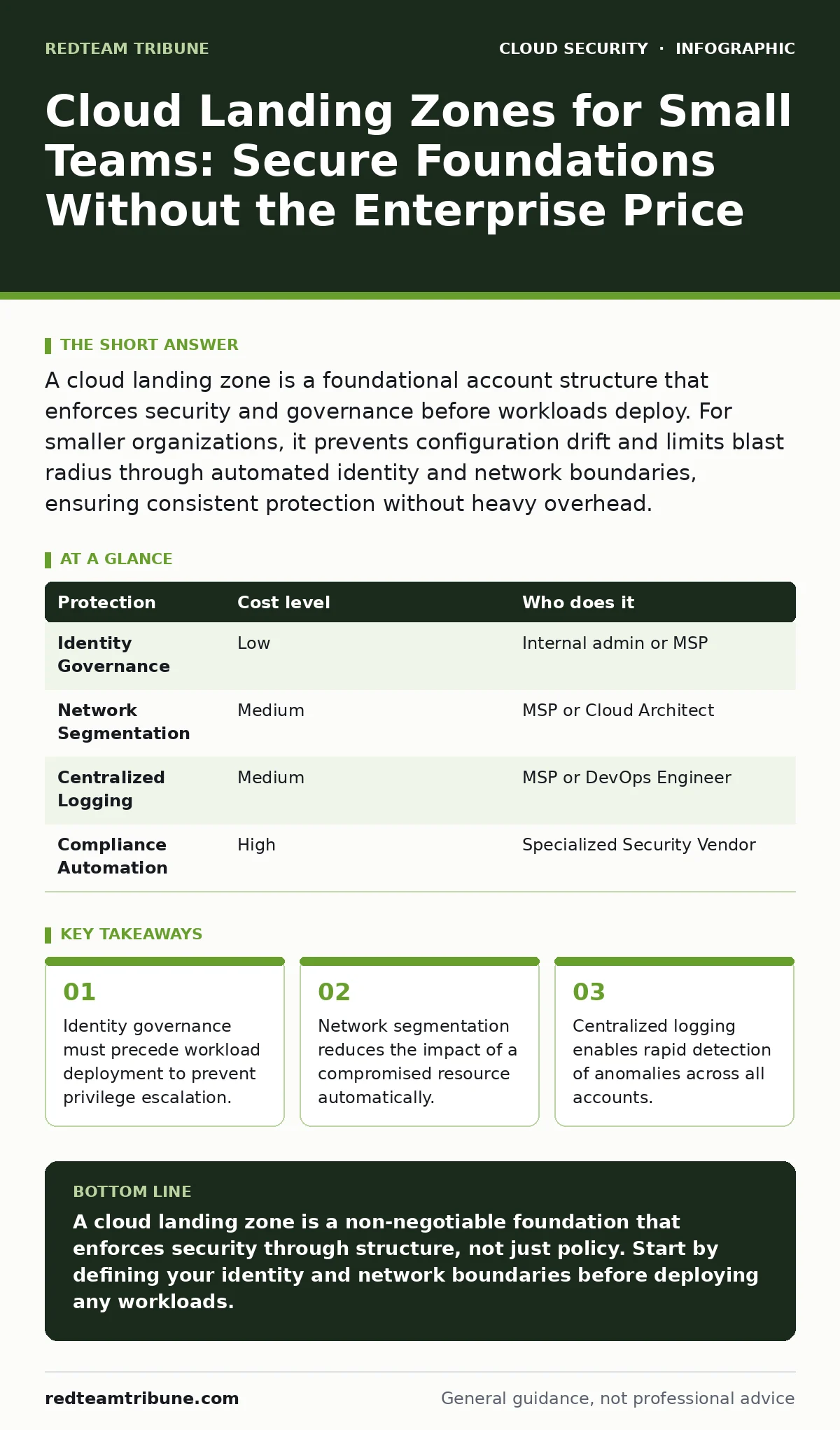
| Protection | Cost level | Who does it |
|---|---|---|
| Identity Governance | Low | Internal admin or MSP |
| Network Segmentation | Medium | MSP or Cloud Architect |
| Centralized Logging | Medium | MSP or DevOps Engineer |
| Compliance Automation | High | Specialized Security Vendor |
Ask your provider specific questions to ensure they are adding value.
- How do you handle incident response if my production environment is compromised?
- Can you provide evidence of your own security certifications and processes?
- What is your process for patching and updating the landing zone infrastructure?
- How do you ensure that my data is encrypted at rest and in transit?
Scaling Without Complexity
As you grow, your landing zone should scale with you. Adding new applications should not require rebuilding your security foundation. The initial investment in structure pays off over time. It reduces the time needed to onboard new resources and decreases the risk of human error.
This foundation supports future initiatives, such as DevSecOps, where security is integrated into the development pipeline. It also prepares you for cloud compliance requirements, which often demand strict segregation and logging. By starting with a strong landing zone, you build a platform that is both secure and adaptable.
Key takeaways
- Identity governance must precede workload deployment to prevent privilege escalation.
- Network segmentation reduces the impact of a compromised resource automatically.
- Centralized logging enables rapid detection of anomalies across all accounts.
A cloud landing zone is a non-negotiable foundation that enforces security through structure, not just policy. Start by defining your identity and network boundaries before deploying any workloads.
Frequently asked questions
Do I need a landing zone if I only have one application?
Yes. Even a single application benefits from strict identity controls and network segmentation to prevent lateral movement and privilege escalation.
How much does it cost to implement a landing zone?
Implementation costs vary, but the ongoing cost is often lower than paying for breaches or manual configuration management. Many cloud providers offer free templates.
Can I use a landing zone with hybrid cloud environments?
Yes. A landing zone can manage resources across multiple cloud providers and on-premises systems, providing a unified view of security and compliance.
Who is responsible for maintaining the landing zone?
Responsibility should be shared. Your internal team defines the policies, while your IT provider or DevOps team implements and maintains the infrastructure code.
How this guide was produced: written by the RedTeam Tribune editorial team with AI assistance, checked against the public references listed below, and reviewed when the facts change. See our editorial policy or report an error.