What Is Extended Detection and Response XDR: How It Unifies Security Data
Extended detection and response correlates signals across endpoints, networks, and clouds to reveal threats that isolated tools miss entirely.
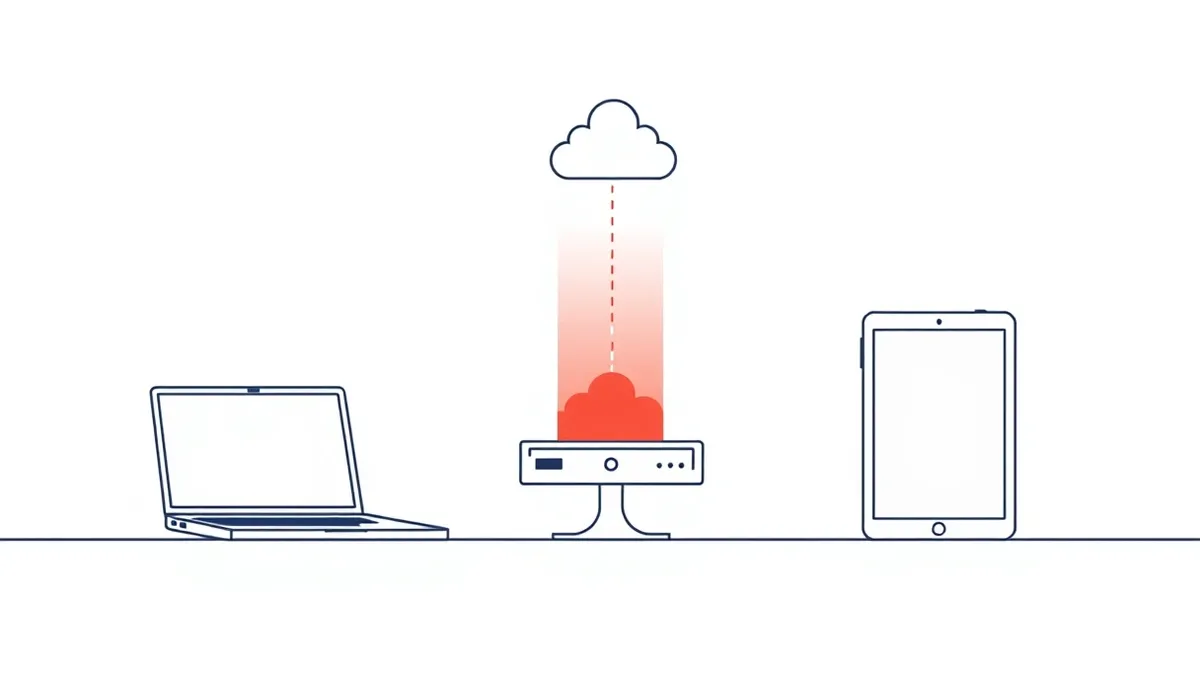
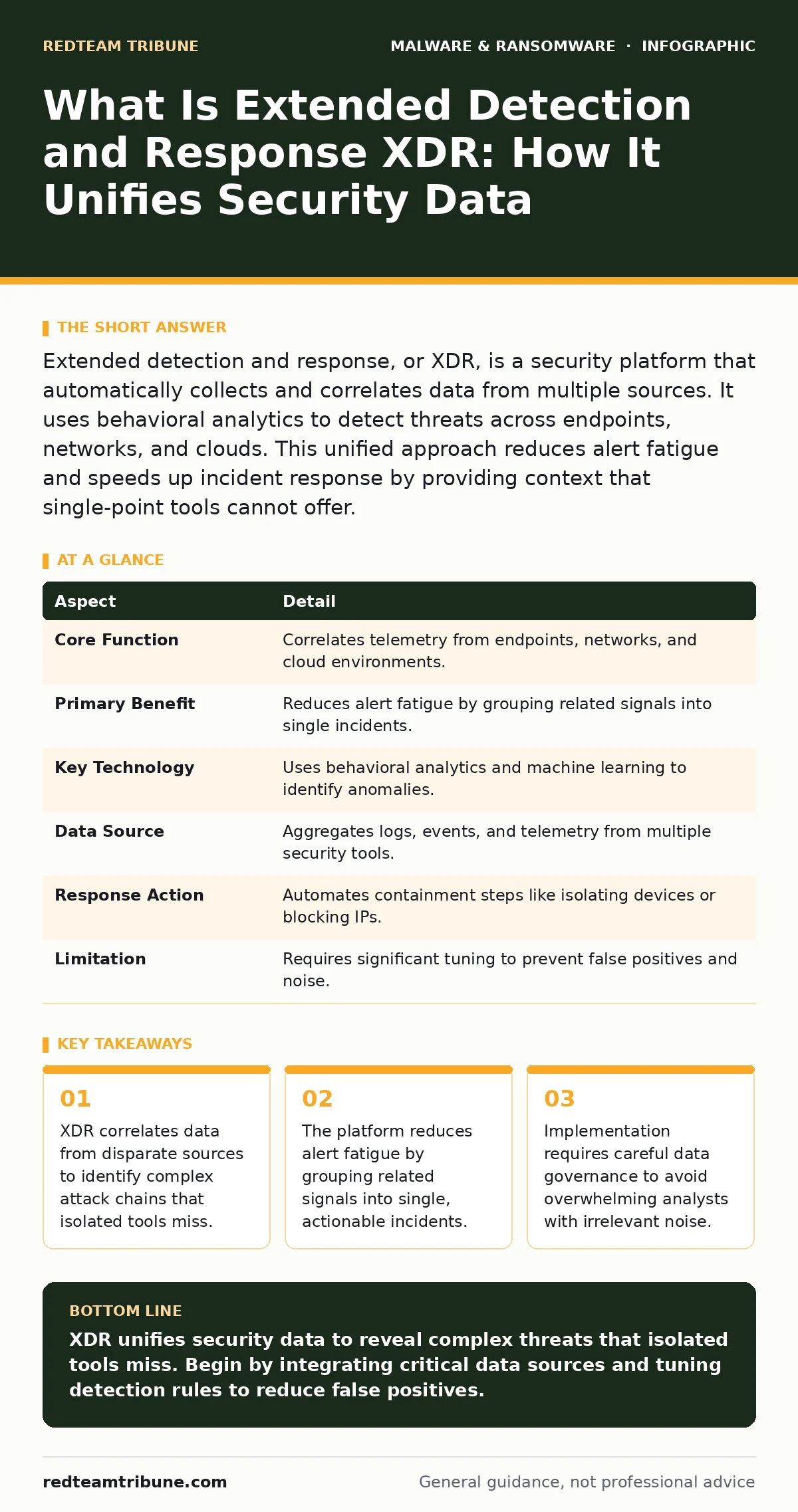
Extended detection and response, or XDR, is a security platform that automatically collects and correlates data from multiple sources. It uses behavioral analytics to detect threats across endpoints, networks, and clouds. This unified approach reduces alert fatigue and speeds up incident response by providing context that single-point tools cannot offer.
Everyday Analogy: The Security Operations Center
Imagine a traditional security setup as a series of isolated alarm systems. One sensor monitors the front door, another watches the windows, and a third guards the safe. When the front door alarm triggers, you know someone entered, but you do not know if they stole the safe contents or just the TV. Extended detection and response acts like a central command center that watches all cameras simultaneously. It sees the door open, the window break, and the safe move. It connects these events into a single narrative of a burglary. This holistic view allows you to respond to the entire incident rather than reacting to individual, disconnected alerts.
At a Glance: XDR Components and Benefits
| Aspect | Detail |
|---|---|
| Core Function | Correlates telemetry from endpoints, networks, and cloud environments. |
| Primary Benefit | Reduces alert fatigue by grouping related signals into single incidents. |
| Key Technology | Uses behavioral analytics and machine learning to identify anomalies. |
| Data Source | Aggregates logs, events, and telemetry from multiple security tools. |
| Response Action | Automates containment steps like isolating devices or blocking IPs. |
| Limitation | Requires significant tuning to prevent false positives and noise. |
What Is Extended Detection and Response XDR
When you ask what is extended detection and response XDR, you are asking how security teams move beyond siloed defenses. Traditional security relies on best-of-breed tools that do not talk to each other. An endpoint detection and response tool sees a malicious process on a laptop. A network intrusion detection system sees unusual traffic. Without XDR, these remain separate alerts.
XDR ingests data from these disparate sources and correlates them. It determines that the unusual network traffic originated from the laptop running the malicious process. This correlation reveals the full scope of an attack. It transforms raw data into actionable intelligence. You gain visibility into the attacker's tactics, techniques, and procedures across the entire environment.
How XDR Works: Data Ingestion and Correlation
XDR platforms operate through a continuous cycle of data collection, analysis, and response. The process begins with telemetry ingestion. The platform connects to data sources such as endpoint agents, network taps, and cloud security posture management tools. It normalizes this data into a common format. This standardization allows the system to compare events across different technologies. Next, the platform applies behavioral analytics.
It establishes a baseline of normal activity for users, devices, and networks. When an event deviates from this baseline, the system flags it as an anomaly. XDR then correlates these anomalies. It links related events across time and space. If a user logs in from an unusual location and then accesses sensitive files, XDR connects these two actions. This correlation reduces the number of alerts you must investigate.
Who XDR Affects: Teams and Environments
XDR impacts security operations teams, incident responders, and IT administrators. For security analysts, it reduces the cognitive load of triaging alerts. Instead of investigating hundreds of low-fidelity alerts, they focus on high-confidence incidents. This efficiency allows smaller teams to manage larger environments. Incident responders benefit from automated containment actions.
XDR can isolate infected endpoints or block malicious domains without human intervention. This speed limits the damage of an attack. IT administrators must manage the data flow. They ensure that relevant telemetry reaches the XDR platform. They also configure the rules that define normal behavior. XDR affects hybrid and multi-cloud environments most significantly. These complex setups generate vast amounts of data. XDR provides the unified view needed to secure them.
What People Usually Get Wrong About XDR
Many organizations believe XDR replaces other security tools. This is incorrect. XDR enhances existing tools by providing context. It does not replace endpoint protection, network monitoring, or email security. It relies on their data. Another common misconception is that XDR is a set-it-and-forget-it solution. XDR requires continuous tuning.
You must adjust detection rules to fit your environment. Without tuning, XDR generates excessive false positives. This leads to alert fatigue, the opposite of its intended benefit. Some teams assume XDR provides complete visibility. It only sees what you feed it. If you do not integrate all critical data sources, you have blind spots. XDR is only as good as the data it ingests.
Common Pitfalls and How to Avoid Them
One major pitfall is poor data quality. If you feed XDR noisy or irrelevant data, it cannot function effectively. You must define clear data retention policies. You should prioritize high-fidelity telemetry over volume. Another pitfall is over-automation. Automating response actions without proper testing can cause outages.
For example, automatically isolating a critical server based on a false positive can disrupt business operations. You must validate automated actions in a test environment first. A third pitfall is ignoring user behavior. XDR can flag normal user actions as malicious if the baseline is incorrect. You must involve IT staff in defining normal behavior. This ensures that XDR does not hinder productivity.
Integration with Related Security Practices
XDR works best when integrated with other security practices. For example, XDR can detect attempts to install malicious PyPI packages on developer machines. By correlating network requests with endpoint activity, it identifies suspicious package installations. XDR also complements email attachment scanning. If an attachment bypasses scanning and executes on an endpoint, XDR detects the execution and correlates it with the email metadata.
This helps identify zero-day threats. XDR supports offline backups by ensuring that backup systems are not compromised. It monitors access to backup storage and alerts on unusual activity. This protects against ransomware that targets backups. XDR also aids in disaster recovery plans by providing detailed logs of an incident. These logs help restore systems to a known good state.
Getting Started with XDR Implementation
Implementing XDR requires a structured approach. Start by identifying critical data sources. Prioritize endpoints, networks, and cloud environments. Ensure that these sources can send telemetry to the XDR platform. Next, define your detection rules. Use industry frameworks to guide this process. Test these rules in a staging environment. Monitor for false positives and adjust accordingly. Train your security team on the XDR interface. They must understand how to investigate incidents and use automated response features. Finally, establish a feedback loop. Regularly review detection effectiveness and update rules. This ensures that XDR adapts to new threats.
Key takeaways
- XDR correlates data from disparate sources to identify complex attack chains that isolated tools miss.
- The platform reduces alert fatigue by grouping related signals into single, actionable incidents.
- Implementation requires careful data governance to avoid overwhelming analysts with irrelevant noise.
- XDR does not replace endpoint protection but enhances it with broader contextual visibility.
XDR unifies security data to reveal complex threats that isolated tools miss. Begin by integrating critical data sources and tuning detection rules to reduce false positives.
Frequently asked questions
Does XDR replace endpoint detection and response?
No, XDR enhances EDR by correlating endpoint data with network and cloud telemetry. It provides broader context for incidents.
Can XDR detect ransomware?
Yes, XDR can detect ransomware by identifying unusual file encryption patterns and correlating them with other malicious activities.
How much data does XDR need?
XDR needs high-fidelity telemetry from critical assets. Quality matters more than quantity. Avoid feeding irrelevant logs.
Is XDR suitable for small businesses?
XDR can benefit small businesses by reducing the need for multiple security tools. Cloud-based XDR solutions offer manageable costs.
How this guide was produced: written by the RedTeam Tribune editorial team with AI assistance, checked against the public references listed below, and reviewed when the facts change. See our editorial policy or report an error.